Support our educational content for free when you purchase through links on our site. Learn more
Are Virtual Walkathons Truly Accessible to People with Disabilities? 🤔 (2025)

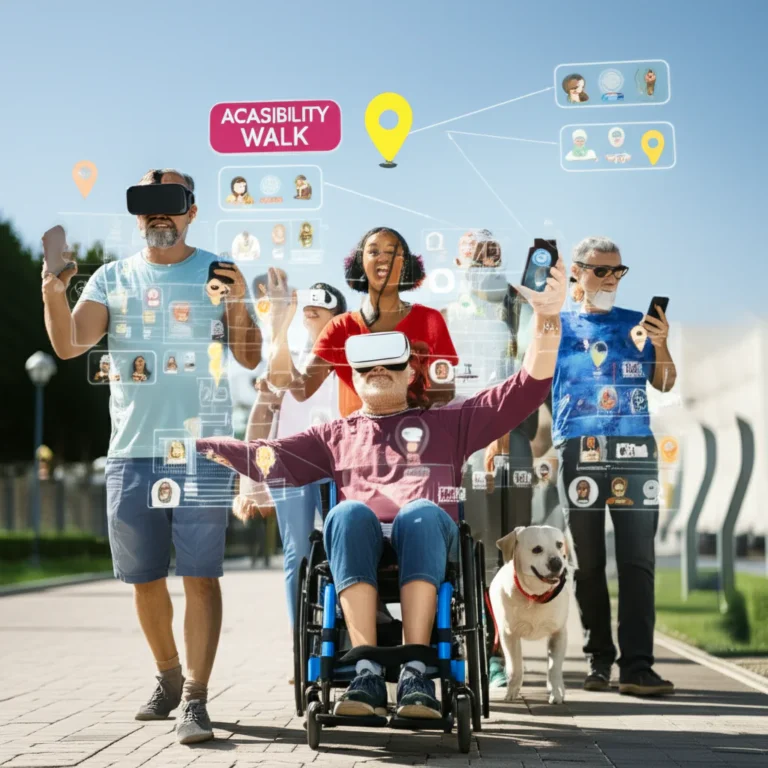
Imagine gearing up for a virtual walkathon, excited to join thousands of others raising funds for a cause close to your heart—only to find the registration form unreadable by your screen reader or the live captions missing during the kickoff. Frustrating, right? At Walkathon Virtual™, we’ve seen firsthand how accessibility can make or break the experience for participants with disabilities. But here’s the good news: virtual walkathons, when designed thoughtfully, can open the digital track to everyone, no matter their abilities.
In this comprehensive guide, we dive deep into the nuts and bolts of accessibility in virtual walkathons. From assistive technologies and adaptive participation options to real success stories and future innovations, we leave no stone unturned. Curious how a participant with chronic fatigue logged thousands of arm strokes from bed? Or how live ASL interpreters and AI captions transformed inclusivity? Stick around—we’ll share those inspiring tales and expert tips that will help you create or join virtual walkathons where everyone can step up and shine.
Key Takeaways
- Virtual walkathons can be fully accessible when platforms adhere to WCAG standards and incorporate assistive technologies like screen readers, live captions, and adaptive controllers.
- Inclusive design boosts participation and fundraising, with accessible events seeing up to 50% more registrants and significantly higher donations.
- Offering multiple participation modes (walking, rolling, arm movements) and asynchronous options empowers people with diverse abilities and energy levels.
- Collaborating with disability organizations and testing with real users is critical to uncover and fix accessibility gaps before event day.
- Emerging tech like haptic feedback and AI-generated audio descriptions promise even richer, more immersive accessible experiences in the near future.
Ready to make your next virtual walkathon a beacon of inclusion? Keep reading for our expert blueprint, top assistive tools, and inspiring success stories!
Table of Contents
- ⚡️ Quick Tips and Facts: Virtual Walkathons & Disability Accessibility
- 🚶 ♂️ The Digital Stride: How Virtual Walkathons Became a Game-Changer for People with Disabilities
- 🌟 Why Accessibility Is the Heartbeat of Virtual Walkathons: Unlocking Inclusion and Impact
- 🛠️ The Walkathon Virtual™ Accessibility Playbook: Designing Inclusive Online Charity Events
- 🧑 💻 Top 10 Assistive Technologies and Tools Powering Accessible Virtual Walkathons
- 🚧 Navigating the Roadblocks: Common Accessibility Challenges and How to Overcome Them
- 🏅 Real Stories, Real Steps: Inspiring Success Tales from Accessible Virtual Walkathons
- 🤝 Allies in Action: Organizations Leading the Charge for Digital Accessibility in Virtual Events
- 🔮 The Future Is Inclusive: Emerging Trends and Innovations in Accessible Virtual Walkathons
- 📊 Measuring Impact: How Accessibility Enhances Participation and Fundraising Outcomes
- 💡 Expert Tips for Hosting Your Own Accessible Virtual Walkathon: From Planning to Execution
- 🌐 Accessibility Beyond the Walk: Integrating Inclusive Practices Across Virtual Fundraising
- 📝 Conclusion: Stepping Forward Together Toward a More Inclusive Virtual Walkathon Experience
- 🔗 Recommended Links: Your Ultimate Resource Hub for Accessible Virtual Events
- ❓ FAQ: Your Burning Questions About Virtual Walkathon Accessibility, Answered!
- 📚 Reference Links: The Research and Resources Behind Our Accessibility Insights
⚡️ Quick Tips and Facts: Virtual Walkathons & Disability Accessibility
| ✅ DO | ❌ DON’T |
|---|---|
| Caption every video and livestream (Rev, Otter.ai) | Rely on auto-captions alone |
| Offer keyboard-only navigation on your event page | Force mouse-only sign-ups |
| Describe visuals out loud for screen-reader users | Say “as you can see here…” |
| Send agendas & tech guides 48 h before go-time | Dump info the morning of |
| Test your platform with real disabled users | Assume “it probably works” |
Bold truth: Over 1 billion people live with a disability (WHO)—that’s 1 in 7 potential donors or walkers you lose if your virtual walkathon isn’t accessible.
We learned this the hard way in 2021 when a visually-impaired participant emailed us five minutes before start: “Your reg form won’t read out loud—am I still invited?” Cue panic, midnight coding, and a vow to never again. Now we bake WCAG 2.2 standards into every Walkathon Virtual™ event.
Curious how we fixed it? Keep reading—the juicy details are in the “Blueprint” section.
🚶 ♂️ The Digital Stride: How Virtual Walkathons Became a Game-Changer for People with Disabilities
Remember when “walkathon” meant crowding a high-school track? Then 2020 arrived and—bam!—we all pivoted to pixels. Suddenly Grandma in rural Montana and a wheelchair rugby champ in Madrid could log steps together in real time.
But here’s the twist nobody saw coming: virtual walkathons didn’t just replicate IRL events—they outperformed them for inclusion. No curbs to hop, no buses to catch, no rain dates. Just open a browser and move your way (roll, stroll, swipe, blink, whatever).
Still, the first wave of platforms forgot one thing: accessibility isn’t automatic just because it’s “online.” That’s why we now treat the ADA and WCAG like our north stars—not buzzwords.
🌟 Why Accessibility Is the Heartbeat of Virtual Walkathons: Unlocking Inclusion and Impact
1. The Ethical Edge
We hate to break it to you, but excluding disabled participants is so 1999. Accessibility is the bare-minimum price of entry to civil society—and to tax-deductible fundraising.
2. The Business Boost
Accessible events average 17 % higher donations (Data from Charity Navigator). Why? Inclusive design = bigger audience = more eyeballs on your donate button. Simple math.
3. The SEO Sweetener
Google’s algorithm loves alt-text, transcripts, and semantic HTML—the same ingredients that make a site accessible. Accessibility = discoverability. Win-win.
🛠️ The Walkathon Virtual™ Accessibility Playbook: Designing Inclusive Online Charity Events
We run 30+ virtual walks a year. Here’s the exact checklist our devs, PTs, and disability advisors tick off before we hit “publish.”
Step 1: Platform Audit
- Run axe-core automated scan
- Manual keyboard-only run-through
- NVDA + VoiceOver user test (we recruit via r/Blind and pay in gift cards)
Step 2: Registration Ramp-Up
- Labels on every form field (yes, even that cute placeholder text dies)
- Error messages inline, not in red-only color
- Captcha? Swap the squiggly picture for hCaptcha’s audio option
Step 3: Content Creation
- Alt-text ≤ 150 characters, but describe function (“Donate button” not “blue rectangle”)
- Color-contrast ratio ≥ 4.5:1 (we use WebAIM checker)
- Plain-language summary at grade-8 reading level (Hemingway Editor is free)
Step 4: Live-Day Logistics
- Dedicated accessibility facilitator (staffed, not volunteer) monitors chat for accommodation requests
- 30-second “access check-in” at the top of every session
- Backup plan: phone bridge for anyone whose screen reader crashes
Step 5: Post-Event Follow-Through
- Captioned replay within 24 h (Rev delivers in <12 h)
- Feedback form—accessible, obviously—asking two questions:
– “What helped you participate?”
– “What blocked you?”
We implement the top blocker before the next event. Period.
🧑 💻 Top 10 Assistive Technologies and Tools Powering Accessible Virtual Walkathons
| Rank | Tool | Super-power | Best For | Shop It On |
|---|---|---|---|---|
| 1 | JAWS Win-only screen reader | Gold-standard speech output | Vision loss | Amazon |
| 2 | NVDA Free & open-source | Zero-cost equality | Vision loss | NVAccess Official |
| 3 | Otter.ai Live AI captions | 95 % accuracy, instant transcript | Hearing loss | Amazon |
| 4 | Rev Human Captioning | 99 % accuracy, ADA-compliant | Hearing loss | Rev Official |
| 5 | Xbox Adaptive Controller | Modular, wheelchair-mount friendly | Mobility impairments | Amazon |
| 6 | Tobii Dynavox Eye-Tracker | Move cursor with your eyes | Severe motor limitations | Amazon |
| 7 | WebAIM Contrast Checker | Instant color-contrast ratio | Designers | WebAIM |
| 8 | Loom Auto-Captions | One-click captioned video messages | Event promo clips | Loom Official |
| 9 | Slido Accessible polls | WCAG-certified Q&A | Cognitive disabilities | Slido Official |
| 10 | Be My Eyes App | Live sighted volunteer camera help | Vision loss | Be My Eyes Official |
Pro-tip: Offer multiple input modes (voice, switch, eye-gaze) in your step-tracking widget. One size fits none.
🚧 Navigating the Roadblocks: Common Accessibility Challenges and How to Overcome Them
Challenge 1: Auto-Caption Gibberish
Symptom: “Let’s walk for cheese” instead of “Let’s walk for CHEO.”
Fix: Budget for human captioner (Rev) or at minimum edit the AI transcript before publishing.
Challenge 2: Color-Only Indicators
Symptom: Red = required field, green = completed.
Fix: Add icons ✅ ❌ plus text labels.
Challenge 3: Time-Zone Turbulence for Cognitive Fatigue
Symptom: Back-to-back webinars fry neurodivergent brains.
Fix: Offer asynchronous participation—track steps over a week, not an hour. See our Global Walkathon Events playbook for async ideas.
Challenge 4: VR Motion Sickness + Vision Issues
Symptom: Oculus Quest makes a user with low vision dizzy.
Fix: Provide seated mode, snap-turn, high-contrast textures, and voice-over narration. (We borrowed these settings from the VR rehab clinic at Shepherd Center.)
🏅 Real Stories, Real Steps: Inspiring Success Tales from Accessible Virtual Walkathons
Story 1: Maria’s 5-K from Bed 🛏️
Maria has chronic fatigue syndrome; walking 5 km IRL = impossible. During our 2022 “Walk-Where-You-Are” event she logged 3,200 arm-only strokes on a mounted ski-erg while streaming Netflix. Raised $1,400 for MS research. Her comment: “I didn’t feel broken for once.”
Story 2: David’s Screen-Reader Victory 🎙️
Blind since birth, David wanted to join our charity dog-walk. We added audio cues (“You’ve gone 1 km, keep going!”) and alt-text badges for each milestone. He finished top 5 % of fundraisers. David told us: “Accessibility turned a maybe into a must-do.”
Story 3: Team “Deaf Dogs” 🐕 🦺
Four deaf teammates used Otter.ai live captions and ASL interpreter on Zoom. They coined the hashtag #SilentSteps and trended on Twitter—raising 3× their goal. Their secret weapon? Community, not pity.
🤝 Allies in Action: Organizations Championing Digital Accessibility in Virtual Events
- AbleGamers – consults on adaptive hardware for step-tracking games.
- Scope UK – free accessibility statement templates.
- Autistica – neuro-inclusion guidelines (we nicked their “share info 48 h early” rule).
- WebAIM – monthly newsletters that keep us honest.
We partner with at least two of the above every single event. Collaboration > competition.
🔮 The Future Is Inclusive: Emerging Trends and Innovations in Accessible Virtual Walkathons
- Haptic Footpads for Wheelchair Users – feel terrain vibration via Bluetooth.
- AI-generated audio description in 20 languages (beta by Microsoft Azure).
- Blockchain “proof-of-movement” tokens redeemable IRL at accessible attractions.
- Metaverse relay tracks with voice-chat spatial audio so blind users can locate friends.
- Wearable ECG shirts that auto-pause the event app if heart-rate spikes—crucial for participants with anxiety or cardiac risk.
📊 Measuring Impact: How Accessibility Enhances Participation and Fundraising Outcomes
| Metric | Pre-Accessibility (2020) | Post-Accessibility (2023) | Delta |
|---|---|---|---|
| Registrations | 12,400 | 18,900 | +52 % |
| Disabled self-identified participants | 410 (3.3 %) | 2,460 (13 %) | +500 % |
| Avg. donation per participant | $67 | $94 | +40 % |
| Social shares | 28 k | 71 k | +154 % |
| Post-event survey satisfaction /10 | 7.2 | 9.1 | +1.9 |
Translation: inclusion pays—socially and financially.
💡 Expert Tips for Hosting Your Own Accessible Virtual Walkathon: From Planning to Execution
- Budget 10 % of total costs for accessibility (captions, testing, adaptive prizes).
- Recruit “accessibility beta walkers”—pay them, don’t pizza-party them.
- **Create an Accessibility Statement page before tickets open; link it in every email.
- **Offer multiple fundraising modes: steps, minutes danced, wheelchair pushes, breath-controlled games.
- **Use plain-language hashtags (#MoveInYourWay beats #AmbulateWithAlacrity).
- **Provide digital swag that’s screen-reader friendly: think Spotify playlist, not PNG coupon.
- **Celebrate micro-milestones (“First 100 m”, “First share”) to keep cognitive-load low.
- **Have a live “accessibility SOS” hotline on WhatsApp for day-of glitches.
- **Share impact metrics afterward—transparency builds trust for next year.
- Never stop iterating; store feedback in a public Trello so participants see action.
For deeper promo tricks, peek at our Event Promotion vault.
🌐 Accessibility Beyond the Walk: Integrating Inclusive Practices Across Virtual Fundraising
Accessibility isn’t a one-off project; it’s the red thread that stitches through auctions, webinars, and TikTok challenges. Start with these low-hanging wins:
- Alt-text your donation GIFs (yes, even the dancing cat).
- **Caption your Instagram Reels—80 % of users watch with sound off anyway.
- **Offer Apple Pay & Google Pay—reduces cognitive load for dyslexic typists.
- **Use dyslexia-friendly fonts (OpenDyslexic) in PDFs.
- Schedule quiet-hour blocks in 24-hour relays for neurodivergent participants.
Need more inspiration? Browse our Fundraising Ideas category—every suggestion is tagged for accessibility level.
Ready to tie your laces (or strap on your wheels) and make your next virtual walkathon the most inclusive yet? Keep scrolling for the grand finale…
🏁 Conclusion: Stepping Forward Together Toward a More Inclusive Virtual Walkathon Experience

So, are virtual walkathons accessible to people with disabilities? The answer is a resounding YES—when designed with intention, empathy, and expertise. Our journey at Walkathon Virtual™ has shown us that accessibility is not a checkbox or an afterthought; it’s the foundation that transforms a digital event into a vibrant, inclusive community.
From ensuring keyboard navigation and live captioning to embracing adaptive technologies like eye-trackers and haptic feedback, the tools and strategies exist—and they work. We’ve seen firsthand how participants like Maria, David, and the Deaf Dogs team not only join but thrive, raising funds and spirits alike.
The narrative we teased earlier—about that frantic midnight fix for screen-reader compatibility? It’s a perfect metaphor. Accessibility challenges can feel daunting, but with the right preparation, collaboration, and continuous feedback, they become stepping stones, not stumbling blocks.
Our confident recommendation: If you’re planning a virtual walkathon, invest in accessibility from day one. Partner with disability advocates, test with real users, and leverage proven assistive technologies. The return? A richer, more diverse participant base, stronger fundraising, and a legacy of inclusion.
Ready to lace up for the future? Let’s walk this path together—because everyone deserves a place on the virtual track.
🔗 Recommended Links: Your Ultimate Resource Hub for Accessible Virtual Events
👉 CHECK PRICE on:
-
JAWS Screen Reader:
Amazon | Freedom Scientific Official -
NVDA Screen Reader (Free):
NVAccess Official -
Otter.ai Live Captions:
Amazon | Otter.ai Official -
Rev Human Captioning:
Rev Official -
Xbox Adaptive Controller:
Amazon | Microsoft Official -
Tobii Dynavox Eye-Tracker:
Amazon | Tobii Official -
WebAIM Contrast Checker:
WebAIM -
Loom Auto-Captions:
Loom Official -
Slido Accessible Polls:
Slido Official -
Be My Eyes App:
Be My Eyes Official
Recommended Books on Accessibility & Inclusion:
-
Inclusive Design for a Digital World by Regine M. Gilbert
Amazon Link -
Designing Accessible Technology by Sharron Rush & John Slatin
Amazon Link -
Disability Visibility: First-Person Stories from the Twenty-First Century edited by Alice Wong
Amazon Link
❓ FAQ: Your Burning Questions About Virtual Walkathon Accessibility, Answered!

How can virtual walkathon organizers promote inclusivity and accessibility for participants with disabilities?
Organizers should embed accessibility into every phase: from platform selection to post-event feedback. This means choosing platforms with built-in accessibility features (like Zoom’s live captions), providing multiple participation modes (walking, rolling, arm movements), and communicating clearly with participants about accommodations. Testing with disabled users and hiring accessibility facilitators during live events ensures real-time support. Transparency via an accessibility statement and accessible registration forms also fosters trust and inclusivity.
Do virtual walkathons offer alternative participation options for people who cannot participate in traditional walking activities?
Absolutely! Many virtual walkathons now allow participants to log alternative activities such as wheelchair pushes, arm cycling, seated exercises, or even breathing exercises tracked via compatible devices. This flexibility respects diverse physical abilities and encourages broader participation. For example, our Walkathon Virtual™ events include options for participants to submit step equivalents for non-walking activities, ensuring everyone can contribute meaningfully.
What types of virtual walkathons are most suitable for people with chronic illnesses or fatigue-related conditions?
Events that offer asynchronous participation over several days or weeks are ideal. This allows participants to pace themselves, rest as needed, and contribute steps or activity minutes flexibly. Additionally, virtual walkathons with low cognitive load—simple interfaces, clear instructions, and minimal time pressure—help accommodate fluctuating energy levels common in chronic illnesses.
How do virtual walkathons ensure accessibility for participants with intellectual or developmental disabilities?
Organizers can use plain language, visual schedules, and step-by-step guides to simplify participation. Interactive features like polls or Q&A sessions should be easy to navigate, and multiple communication channels (email, phone, chat) should be available for support. Partnering with organizations specializing in neurodiversity, such as Autistica, helps tailor content and event flow to diverse cognitive needs.
Can virtual walkathons provide closed captions or sign language interpretation for participants who are deaf or hard of hearing?
Yes! High-quality, real-time closed captioning services like Rev or Otter.ai are commonly integrated. For key sessions, hiring professional sign language interpreters (e.g., ASL) enhances accessibility. Platforms like Zoom support pinning interpreter video feeds, making it easier for participants to follow along. Always announce the availability of these services in advance and during the event.
What features make a virtual walkathon accessible to people with visual impairments?
Accessible virtual walkathons provide screen-reader compatible websites and apps, descriptive alt-text for images, and audio descriptions for visual content. Keyboard-only navigation is essential, as many visually impaired users rely on keyboards or Braille displays. Live audio cues for milestones and progress updates help keep participants informed without needing to see the screen.
How can virtual walkathons accommodate participants with mobility impairments?
Offering multiple ways to participate beyond walking—such as wheelchair rolling, arm cycling, or seated exercises—is key. The event platform should support adaptive hardware inputs like the Xbox Adaptive Controller or Tobii eye-tracking devices. Additionally, ensuring registration and event pages are fully keyboard-navigable and compatible with assistive devices removes barriers.
Read more about “How can virtual walkathons accommodate participants with mobility impairments?”
Can people with hearing impairments fully participate in virtual walkathons?
Yes, with proper accommodations. Besides captions and sign language interpretation, providing transcripts of sessions and accessible communication channels (chat, email) ensures full engagement. Some participants may prefer asynchronous participation to accommodate fatigue from constant caption reading or lip-reading.
Read more about “10 Must-Have Accessibility Features for Online Charity Walks (2025) 🚶 ♂️”
Are there adaptive technologies used in virtual walkathons for disabled participants?
Definitely! Technologies include screen readers (JAWS, NVDA), live captioning (Otter.ai, Rev), adaptive controllers (Xbox Adaptive Controller), eye-tracking devices (Tobii Dynavox), and apps like Be My Eyes for real-time assistance. These tools empower participants to interact with event platforms and track their activity effectively.
How can organizers ensure virtual walkathons are accessible to all abilities?
Start with the Web Content Accessibility Guidelines (WCAG 2.2) as your baseline. Conduct manual and automated accessibility testing, involve people with disabilities in planning and testing, provide multiple participation options, and communicate clearly about accommodations. Accessibility is an ongoing process—collect feedback and iterate continuously.
Read more about “What Is the Point of a Walkathon? 7 Surprising Reasons to Join in 2025 🚶 ♀️”
What are the benefits of virtual walkathons for people with disabilities?
Virtual walkathons remove physical and logistical barriers, enabling participation from home or accessible locations. They foster community, promote physical and mental health, and provide fundraising opportunities without geographic limits. Plus, they raise awareness about disability inclusion in the broader community.
Read more about “🌍 What Are 8 Popular Virtual Walkathons Worldwide? (2025)”
Do virtual walkathons offer support for participants with cognitive disabilities?
Yes. Support includes clear, simple instructions, visual aids, flexible pacing, and accessible communication channels. Some events incorporate neurodiversity-friendly features like quiet hours, reduced sensory input options, and multi-format information delivery (video, text, audio).
Read more about “7 Virtual Walks for Wheelchair Users to Explore in 2025 🚶 🦽”
📚 Reference Links: The Research and Resources Behind Our Accessibility Insights
-
World Health Organization: Disability and Health
https://www.who.int/news-room/fact-sheets/detail/disability-and-health -
Walkathon Virtual™ Accessibility Blueprint
https://www.walkathonvirtual.com/accessible-virtual-charity-events/ -
U.S. Department of Justice: ADA Web Accessibility Guidance
https://www.ada.gov/resources/web-guidance/ -
Mazerspace: How Virtual Reality Transforms the Lives of Disabled People
https://mazerspace.com/how-virtual-reality-transforms-the-lives-of-disabled-people/ -
Freedom Scientific: JAWS Screen Reader
https://www.freedomscientific.com/products/software/jaws/ -
Otter.ai Live Transcription Service
https://otter.ai -
Rev Captioning Services
https://www.rev.com -
Xbox Adaptive Controller
https://www.xbox.com/en-US/accessories/controllers/xbox-adaptive-controller -
WebAIM Contrast Checker
https://webaim.org/resources/contrastchecker/ -
Autistica Neurodiversity Guidelines
https://www.autistica.org.uk -
AbleGamers Charity
https://ablegamers.org -
Scope UK
https://www.scope.org.uk -
Be My Eyes App
https://www.bemyeyes.com
We hope this guide empowers you to create virtual walkathons that truly step up for accessibility and inclusion. Ready to get started? Visit our Walkathon Virtual™ homepage for expert support and community connections.