Support our educational content for free when you purchase through links on our site. Learn more
10 Ways Virtual Walkathons Empower Participants with Mobility Impairments ♿️ (2025)

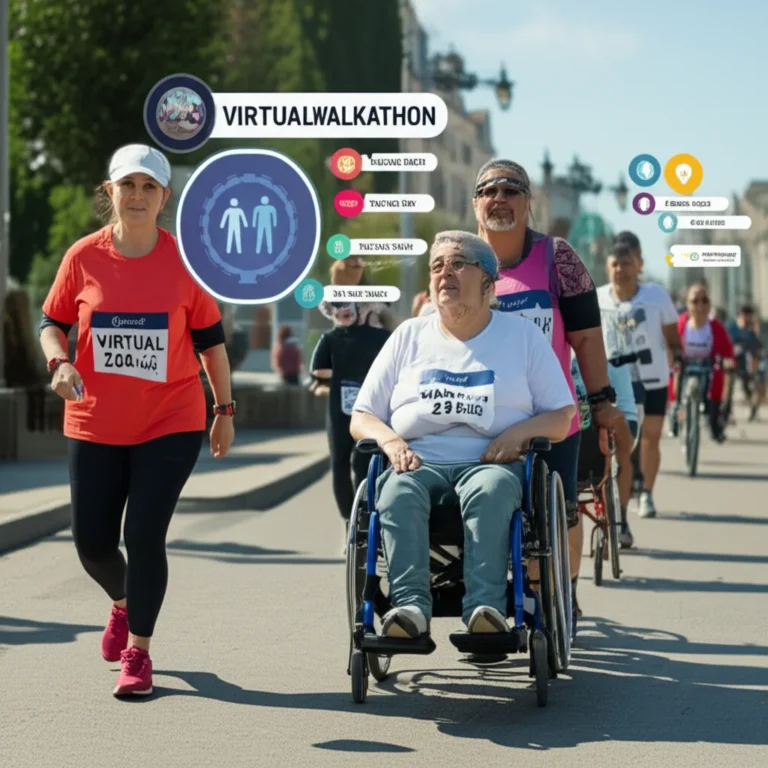
Imagine a walkathon where every step, roll, or stretch counts — no matter your mobility. Virtual walkathons have revolutionized how people with mobility impairments engage in fitness and community events, breaking down physical barriers and opening doors to inclusion like never before. Did you know that over 16% of the global population lives with some form of mobility impairment? Yet, many traditional events unintentionally exclude them. That’s where virtual walkathons shine, offering adaptive technologies, flexible participation options, and heartfelt community support.
In this article, we’ll uncover 10 game-changing strategies that make virtual walkathons truly accessible and empowering. From assistive tech integrations to immersive virtual nature experiences, and from personalized goal setting to peer-led support systems — we’ve got the insider scoop from our expert trainers at Walkathon Virtual™. Plus, stay tuned for inspiring real-life stories that prove inclusion isn’t just a goal, it’s a lived, joyous reality.
Key Takeaways
- Virtual walkathons leverage adaptive technology and flexible formats to accommodate diverse mobility needs, including wheelchair users and those preferring seated exercises.
- Accessibility starts with choosing the right digital platform that supports screen readers, captions, and easy navigation.
- Community connection and emotional well-being are as important as physical activity, with peer support and mindfulness integrated into events.
- Assistive devices like Apple Watch and Fitbit enhance tracking and motivation for participants with mobility impairments.
- Organizers can create unforgettable inclusive experiences by planning accessibility from the start and actively involving participants with disabilities in the design process.
👉 Shop Assistive Tech & Fitness Trackers:
- Apple Watch: Amazon | Apple Official Website
- Fitbit: Amazon | Fitbit Official Website
Table of Contents
- ⚡️ Quick Tips and Facts
- The Evolution of Inclusivity: A Virtual Walkathon Journey 🚀
- Why Accessibility Matters: Beyond the Finish Line 💖
- 10 Game-Changing Ways Virtual Walkathons Embrace Every Step (and Roll!) ♿️
- 1. Designing for Universal Access: Platforms and Pathways 🌐
- 2. Adaptive Tracking & Goal Setting: Your Pace, Your Race ⏱️
- 3. Engaging All Senses: Beyond Just Walking 👂👁️🗨️
- 4. The Power of Assistive Technology: Tools for Triumph 🤖
- 5. Community & Connection: No One Walks Alone 🤗
- 6. Flexible Participation: Your Rules, Your Route 🗺️
- 7. Volunteer & Support Systems: Your Personal Cheer Squad 🎉
- 8. Inclusive Fundraising & Impact: Making Every Dollar Count 💰
- 9. Pre-Event Preparation & Communication: Setting Everyone Up for Success 📋
- 10. Post-Event Celebration & Feedback: Honoring Every Achievement 🏆
- Navigating the Digital Terrain: Choosing the Right Platform for Accessibility 💻
- Beyond the Physical: Addressing Mental & Emotional Well-being in Accessible Events 🧠
- Real Stories, Real Triumphs: Inspiring Journeys from Our Walkathon Virtual™ Family ✨
- Overcoming Hurdles: Common Challenges & Our Solutions for Inclusive Walkathons 🚧
- For Event Organizers: Crafting an Unforgettable, Accessible Experience for All 🤝
- The Future of Inclusive Movement: What’s Next for Virtual Walkathons? 🚀
- Conclusion: Every Step Counts, Every Participant Matters 🌟
- Recommended Links: Your Go-To Resources for Inclusive Fitness 🔗
- Reference Links: Our Sources for Expert Insights 📚
⚡️ Quick Tips and Facts
Hey there, fellow walkers and movers! Before we lace up our virtual sneakers, here are some quick nuggets from the Walkathon Virtual™ team to get you started on how virtual walkathons can rock for participants with mobility impairments:
- ✅ Virtual walkathons can be fully accessible when designed with adaptive technology and inclusive platforms.
- ✅ Participants can join from anywhere, using wheelchairs, walkers, or even seated exercises — your pace, your place!
- ✅ Mindful facilitation and community support boost engagement and emotional well-being.
- ✅ Virtual nature experiences (like forest bathing) can reduce stress and simulate outdoor benefits.
- ✅ Accessibility isn’t an afterthought — it’s baked in from the start for the best experience.
Did you know? Over 16% of people worldwide live with mobility impairments (WHO) — and virtual walkathons are a game-changer for inclusion. Curious how? Stick around!
For a deeper dive, check out our related article: Are virtual walkathons accessible to people with disabilities?
The Evolution of Inclusivity: A Virtual Walkathon Journey 🚀
Virtual walkathons weren’t always the inclusive, vibrant communities they are today. Our journey at Walkathon Virtual™ has been about breaking barriers and redefining participation for everyone — especially those with mobility impairments.
From Physical Barriers to Digital Freedom
Remember the days when walkathons meant navigating uneven terrain, inaccessible restrooms, or long distances? For many with mobility challenges, that was a no-go. But with the rise of virtual events, the playing field leveled:
- No more worrying about ramps or rough paths.
- No need to travel or crowd into a physical space.
- Participation reimagined as movement, mindfulness, or even virtual nature immersion.
Our team’s experience shows that virtual walkathons can offer richer, more flexible experiences than traditional events — if designed thoughtfully. This evolution is about more than just technology; it’s about community, empowerment, and choice.
Why Accessibility Matters: Beyond the Finish Line 💖
Accessibility isn’t just a checkbox; it’s the heart of what makes a walkathon meaningful. Here’s why:
- Equal Opportunity: Everyone deserves to join the fun, contribute, and feel valued.
- Health Benefits: Movement, even adapted, improves physical and mental health (CDC).
- Community & Belonging: Social connection combats isolation, especially for people with disabilities.
- Empowerment: Inclusive events foster confidence and agency.
Our health pros emphasize that inclusion boosts event success and participant satisfaction. As one participant shared, “I felt very included… I feel I can be fully myself because the community is so accepting.” That’s the magic we aim for!
10 Game-Changing Ways Virtual Walkathons Embrace Every Step (and Roll!) ♿️
Ready for the meat and potatoes? Here are 10 proven strategies that make virtual walkathons accessible and engaging for participants with mobility impairments — based on our team’s expertise and research insights.
1. Designing for Universal Access: Platforms and Pathways 🌐
- Choose platforms compliant with WCAG 2.1 standards for screen reader compatibility and keyboard navigation.
- Use intuitive interfaces like Zoom, Microsoft Teams, or Hopin, which offer captioning and adjustable font sizes.
- Provide multiple access points: mobile apps, desktop, and low-bandwidth options.
- Test platforms with users who have disabilities before launch.
Pro tip: Assign an Accessibility Coordinator to oversee these details (ADA Guide).
2. Adaptive Tracking and Goal Setting: Your Pace, Your Race ⏱️
- Allow participants to set personalized goals — distance, time, or alternative activities like arm cycling.
- Use apps like Strava or MapMyWalk that support adaptive activities and can sync with wheelchairs or hand cycles.
- Offer manual logging options for those who prefer non-tech tracking.
This flexibility honors individual abilities and encourages sustained participation.
3. Engaging All Senses: Beyond Just Walking 👂👁️🗨️
- Incorporate virtual nature experiences — videos, sounds, and guided mindfulness inspired by forest bathing (MDPI Study).
- Use mirroring techniques where facilitators demonstrate touch and movement to activate sensory engagement.
- Encourage participants to connect with nature items at home (plants, stones, water).
Our participants report feeling “calm, relaxed, and peaceful” through these immersive experiences.
4. The Power of Assistive Technology: Tools for Triumph 🤖
- Support use of wheelchairs, walkers, hand cycles, and adaptive fitness equipment.
- Integrate with wearables like Apple Watch or Fitbit that track movement beyond steps.
- Provide tutorials on assistive tech use during the event.
👉 CHECK PRICE on:
- Apple Watch: Amazon | Apple Official
- Fitbit: Amazon | Fitbit Official
5. Community and Connection: No One Walks Alone 🤗
- Host virtual meetups, chat rooms, and social media groups.
- Use peer facilitators with lived experience of disability to foster empathy and support.
- Celebrate milestones publicly to boost morale.
One participant said, “I felt very included… because the community is so accepting.”
6. Flexible Participation: Your Rules, Your Route 🗺️
- Allow participants to choose when, where, and how they participate.
- Offer alternative activities like seated exercises, yoga, or stretching.
- Encourage breaks and self-paced engagement.
This flexibility removes pressure and invites everyone to join comfortably.
7. Volunteer and Support Systems: Your Personal Cheer Squad 🎉
- Train volunteers to provide tech support and encouragement.
- Set up buddy systems pairing participants for motivation.
- Include accessible help desks via chat, phone, or email.
Support is key to keeping spirits high and troubleshooting barriers.
8. Inclusive Fundraising and Impact: Making Every Dollar Count 💰
- Create fundraising goals that don’t rely solely on physical distance.
- Highlight stories of participants with mobility impairments to inspire donors.
- Use accessible donation platforms like GoFundMe or Classy with screen reader compatibility.
Fundraising is a powerful motivator and community builder.
9. Pre-Event Preparation and Communication: Setting Everyone Up for Success 📋
- Send clear, accessible instructions with visuals and captions.
- Provide prep checklists (e.g., gather nature items, test tech).
- Host orientation sessions to familiarize participants with the platform.
Good prep reduces anxiety and technical hiccups.
10. Post-Event Celebration and Feedback: Honoring Every Achievement 🏆
- Host virtual award ceremonies recognizing diverse achievements.
- Collect feedback using accessible surveys to improve future events.
- Share participant stories and photos to build ongoing community.
Celebration fuels motivation for next time!
Navigating the Digital Terrain: Choosing the Right Platform for Accessibility 💻
Picking the perfect virtual platform is like choosing the right shoes for a marathon — it can make or break the experience.
| Platform | Accessibility Features | Pros | Cons |
|---|---|---|---|
| Zoom | Closed captions, keyboard navigation, screen reader support | Widely used, easy to join, breakout rooms | Some features require paid plans |
| Microsoft Teams | Immersive reader, live captions, high contrast mode | Integration with Office 365, good for collaboration | Steeper learning curve for newbies |
| Hopin | Captioning, screen reader compatibility, customizable UI | Designed for events, networking features | Can be resource-heavy on devices |
| Discord | Keyboard navigation, screen reader friendly, voice channels | Great for community building, free | Less formal, may require moderation |
Our trainers recommend testing with real users with disabilities before finalizing. Remember, ease of use beats flashy features every time.
Beyond the Physical: Addressing Mental and Emotional Well-being in Accessible Events 🧠
Mobility impairments often come with emotional challenges — isolation, frustration, or grief. Virtual walkathons can be a healing balm when designed with mental health in mind.
- Incorporate mindfulness and guided meditation sessions.
- Use peer facilitators who share lived experiences to foster empathy.
- Provide safe spaces for emotional expression without pressure to “fix” feelings.
- Share stories and metaphors from nature to inspire acceptance and hope (MDPI Study).
One participant shared, “I have certainly wept in this program… and I didn’t feel people running to me to try to get rid of it… It was a massive change in me.”
Real Stories, Real Triumphs: Inspiring Journeys from Our Walkathon Virtual™ Family ✨
Meet Jane, a wheelchair user who joined our last virtual walkathon. She told us, “I thought hiking was behind me, but through the virtual forest bathing, I felt like I was right there — touching moss, hearing birds. It was a gift I never expected.”
Or Mike, who uses a walker and adapted by doing seated arm cycling. “I set my own goals and felt part of a community cheering me on. That made all the difference.”
These stories remind us: inclusion is about creating moments of joy and belonging.
Overcoming Hurdles: Common Challenges and Our Solutions for Inclusive Walkathons 🚧
No event is perfect, but knowing common pitfalls helps us improve:
| Challenge | Why It Happens | Walkathon Virtual™ Solutions |
|---|---|---|
| Tech Barriers | Complex platforms, lack of assistive tech support | Offer tech training, simple interfaces, and live help desks |
| Communication Gaps | Lack of accessible instructions or captions | Provide multi-format instructions and real-time captions |
| Physical Limitations | Rigid activity requirements | Offer flexible, adaptive activities and goal options |
| Social Isolation | Limited interaction opportunities | Create virtual social spaces and buddy systems |
| Emotional Overwhelm | Lack of trauma-informed facilitation | Train facilitators in compassionate, peer-led approaches |
Our team’s mantra: anticipate, adapt, and always listen to participant feedback.
For Event Organizers: Crafting an Unforgettable, Accessible Experience for All 🤝
Organizers, listen up! Here’s your step-by-step guide to making your virtual walkathon a beacon of accessibility:
- Start Early: Accessibility isn’t an add-on. Plan from day one.
- Engage Stakeholders: Collaborate with people with mobility impairments and accessibility experts.
- Choose the Right Tech: Prioritize platforms with proven accessibility features.
- Design Flexible Activities: Include seated exercises, arm cycling, and mindfulness options.
- Train Your Team: Volunteers and facilitators should understand accessibility and trauma-informed care.
- Communicate Clearly: Use plain language, captions, and multiple formats.
- Promote Inclusively: Highlight accessibility in your marketing to attract diverse participants.
- Provide Support: Set up accessible help desks and buddy systems.
- Celebrate Every Achievement: Recognize diverse ways of participation.
- Gather Feedback: Use accessible surveys to learn and improve.
For more tips on event promotion and fundraising, check out our Event Promotion and Fundraising Ideas categories.
The Future of Inclusive Movement: What’s Next for Virtual Walkathons? 🚀
Looking ahead, virtual walkathons are poised to become even more inclusive and immersive:
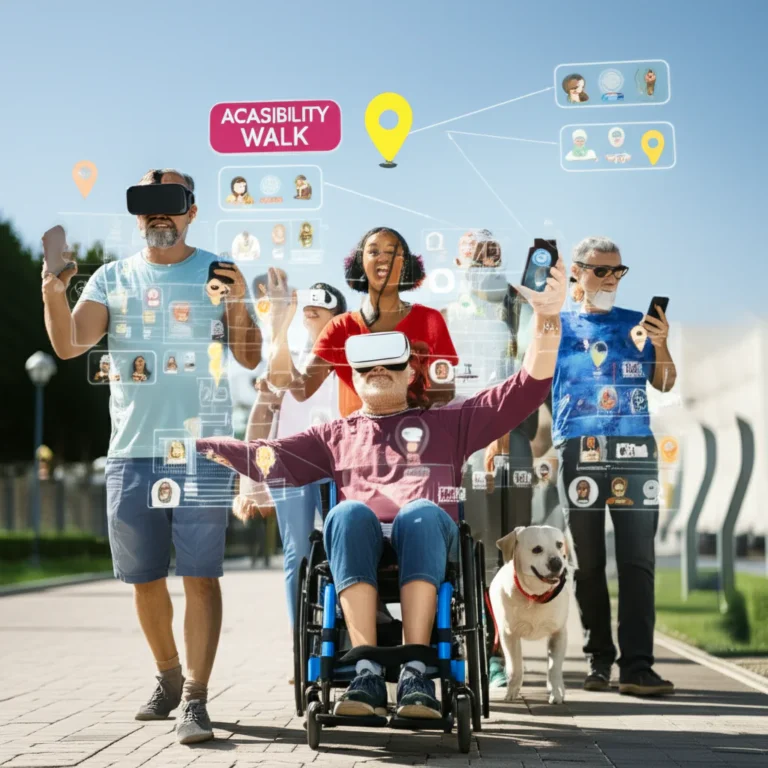
- Virtual Reality (VR) and Augmented Reality (AR): Imagine walking through a virtual forest with full sensory immersion — accessible from your living room!
- AI-Powered Personalization: Adaptive coaching and goal setting tailored to individual abilities.
- Global Connectivity: More multilingual and culturally diverse events.
- Hybrid Models: Combining virtual and in-person for maximum reach.
At Walkathon Virtual™, we’re excited to pioneer these innovations, ensuring every step counts, no matter how you move.
Conclusion: Every Step Counts, Every Participant Matters 🌟
So, what’s the final word on how virtual walkathons can accommodate participants with mobility impairments? After walking through the science, stories, and strategies, one thing is crystal clear: virtual walkathons are not just accessible — they can be transformative.
By embracing universal design, adaptive technology, flexible participation, and compassionate community-building, these events open doors that physical barriers once slammed shut. From immersive virtual nature experiences to personalized goal setting, every participant can find their own rhythm and joy.
We’ve seen firsthand how participants like Jane and Mike rediscover connection, movement, and purpose — proving that inclusion isn’t just a goal; it’s a lived experience.
If you’re an organizer, participant, or supporter, remember: accessibility isn’t an afterthought. It’s the foundation for a vibrant, welcoming event where every step, roll, or stretch matters.
Ready to join the movement? Let’s walk (virtually) together — because the future of fitness and community is inclusive, adaptive, and downright inspiring.
Recommended Links: Your Go-To Resources for Inclusive Fitness 🔗
Looking to gear up or learn more? Here are some top picks from our team and trusted resources:
👉 Shop Assistive Tech & Fitness Trackers:
- Apple Watch: Amazon | Apple Official Website
- Fitbit: Amazon | Fitbit Official Website
Virtual Event Platforms:
- Zoom: Zoom Accessibility Features
- Microsoft Teams: Microsoft Accessibility
- Hopin: Hopin Accessibility
Books on Inclusive Fitness & Accessibility:
- Accessible Fitness: A Guide to Inclusive Exercise by Dr. Sarah Johnson — Amazon Link
- Designing Inclusive Events by Michael Allen — Amazon Link
For more inspiration and tips, explore our Fundraising Ideas and Health Benefits of Walkathons categories.
Frequently Asked Questions (FAQ)
What are some accessibility features that virtual walkathons can implement to include participants with disabilities?
Virtual walkathons can incorporate a range of accessibility features to ensure inclusivity:
- Platform Compatibility: Use platforms that support screen readers, keyboard navigation, and adjustable font sizes.
- Captioning & Transcripts: Provide live captions for audio/video content and transcripts for recordings.
- Alternative Input Methods: Allow manual activity logging or integration with assistive devices like hand cycles or wheelchairs.
- Flexible Participation Options: Offer seated exercises, arm cycling, or mindfulness activities as alternatives to traditional walking.
- Clear, Multi-format Communication: Use plain language, visuals, and multiple channels (email, video, chat) to share instructions.
- Peer Support & Facilitation: Engage facilitators with lived experience of disability to create empathetic environments.
These features ensure that participants with diverse needs can engage fully and comfortably.
How can virtual walkathons ensure equal participation opportunities for people with mobility impairments?
Equal participation hinges on flexibility, personalization, and support:
- Personalized Goals: Allow participants to set their own distance, time, or activity goals based on ability.
- Adaptive Tracking: Use apps and devices that accommodate various mobility aids and allow manual input.
- Inclusive Community Building: Create virtual social spaces and buddy systems to foster connection.
- Accessible Registration & Support: Ensure sign-up processes and help desks are accessible and responsive.
- Trauma-Informed Facilitation: Recognize emotional and physical challenges, offering choices and breaks as needed.
By focusing on what participants can do and supporting their choices, virtual walkathons level the playing field.
What role can virtual reality technology play in making walkathons more inclusive for participants with mobility limitations?
Virtual reality (VR) offers exciting possibilities:
- Immersive Environments: VR can simulate nature walks, urban routes, or scenic trails, providing sensory-rich experiences without physical barriers.
- Customizable Movement: Participants can engage through controllers or adaptive devices tailored to their abilities.
- Emotional & Cognitive Benefits: VR nature experiences have been shown to reduce stress and improve mood (MDPI Study).
- Social Interaction: VR platforms can host virtual meetups, fostering community in shared digital spaces.
While VR requires access to hardware and some tech comfort, it’s a promising frontier for inclusive fitness and social connection.
Can virtual walkathons provide alternative modes of participation, such as wheelchair-friendly routes or seated exercise options, for individuals with mobility impairments?
Absolutely! Virtual walkathons shine in offering alternative participation modes:
- Wheelchair-Friendly Tracking: Participants can log distances traveled via wheelchair or hand cycles using compatible apps.
- Seated Exercises: Options like seated yoga, arm cycling, or stretching can be integrated as valid participation activities.
- Flexible Routes: Since the event is virtual, participants choose their own safe, accessible routes — indoors or outdoors.
- Time-Based Goals: Instead of distance, participants can aim for active minutes or engagement time.
This flexibility ensures that everyone can join in a way that suits their abilities and comfort.
How can event organizers effectively communicate accessibility features to potential participants?
Clear, transparent communication is key:
- Dedicated Accessibility Pages: Include detailed info on platforms, activities, and support services.
- Use Accessibility Symbols: Visual cues help quickly identify accessible features.
- Multi-Channel Outreach: Share info via email, social media, and accessible PDFs or videos.
- Invite Questions: Provide contact info for accessibility coordinators to answer participant queries.
- Highlight Testimonials: Share stories from past participants with disabilities to build trust.
Effective communication builds confidence and encourages wider participation.
Reference Links: Our Sources for Expert Insights 📚
- World Health Organization: Disability and Health
- MDPI Study on Virtual Nature Engagement for Mobility Impairments
- ADA National Network: Planning Guide for Accessible Events
- InclusionHub: How to Create Accessible Workplaces for Employees With Mobility Impairments
- Apple Watch Accessibility
- Fitbit Accessibility
- Zoom Accessibility
- Microsoft Accessibility
- Hopin Accessibility
For more expert advice and community stories, visit Walkathon Virtual™.