Support our educational content for free when you purchase through links on our site. Learn more
🚶 ♀️ What Is a Virtual Walkathon? The 2026 Guide to Moving Anywhere

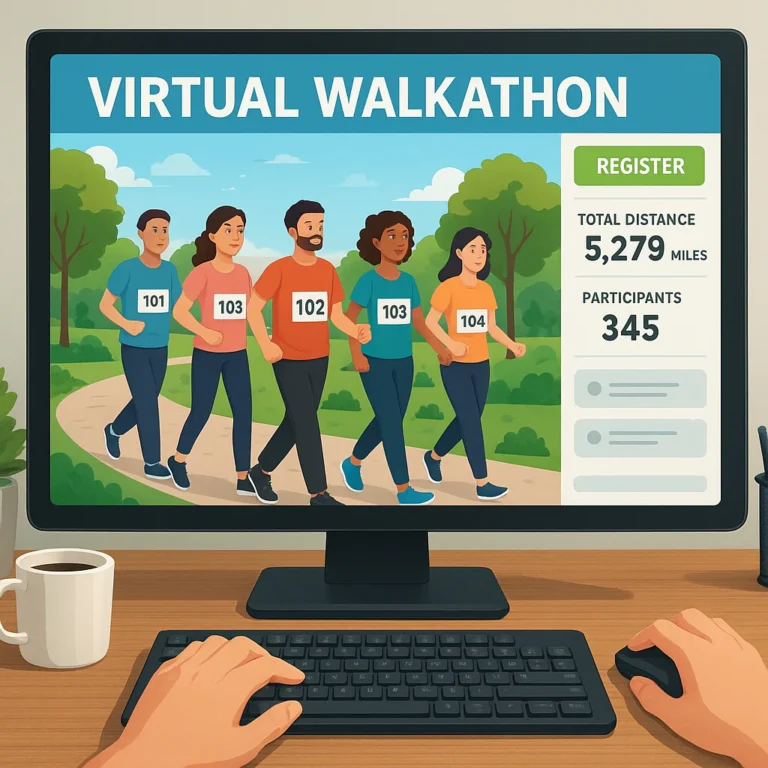
A virtual walkathon is a flexible, location-independent fundraising event where participants complete a physical challenge—like walking, running, or cycling—on their own schedule while raising money for a cause. If you’ve ever wondered, “What is a virtual walkathon?” the answer is simple: it’s your chance to turn every step you take into a donation, whether you’re on a treadmill in your living room or hiking a mountain trail in another country.
Imagine logging 5 miles in your pajamas at 10 PM, then instantly seeing your donation unlock a meal for a family in need. That’s the power of the virtual format. Unlike traditional races that require massive permits and perfect weather, these events have exploded in popularity, with some organizations reporting that virtual participants raise twice as much as their in-person counterparts.
The beauty lies in the freedom. You aren’t bound by a start gun or a finish line tape. You are the architect of your own journey.
Key Takeaways
- Definition: A virtual walkathon allows you to complete a distance challenge from any location on your own timeline.
- Fundraising Power: Participants often raise 2x more than traditional event attendees due to extended campaign windows.
- Inclusivity: Perfect for all fitness levels, ages, and abilities, including those who prefer treadmill workouts or outdoor trails.
- Tech-Driven: Modern events use apps like Strava or Apple Health to track progress and verify completion automatically.
- Global Impact: Connect with a worldwide community of movers and shakers dedicated to the same cause.
Table of Contents
- ⚡️ Quick Tips and Facts
- 🕰️ The Evolution of the Virtual Walkathon: From Couch to Cause
- 🤔 What Exactly Is a Virtual Walkathon or Race?
- 🏃 ♀️ Why Choose a Virtual Walk or Race Over a Traditional Event?
- 📋 The Ultimate Checklist for Planning Your Virtual Walkathon
- Define Your Mission and Set Realistic Fundraising Goals
- Select the Perfect Date and Duration for Maximum Participation
- Choose the Right Virtual Walkathon Platform and Tech Stack
- Design an Engaging Registration Page and Donation Flow
- Create a Swag Strategy: Medals, Shirts, and Digital Badges
- Recruit Participants and Build Your Virtual Community
- Develop a Marketing Plan to Drive Traffic and Registrations
- Prepare for Race Day: Communication and Support Systems
- Track Progress, Verify Results, and Celebrate Wins
- Post-Event Follow-Up: Thank You Notes and Impact Reporting
- 🛠️ How to Setup and Organize a Virtual Walkathon: A Step-by-Step Guide
- 📱 Choosing the Best Virtual Race Platform for Your Needs
- 📣 Engaging Your Community Before, During, and After the Event
- 💰 Best Practices to Raise More Funds Through Your Virtual Race
- 📊 Impact Reporting & Tracking Data for Increased Results
- 👕 A Simple Way To Manage T-Shirt Distribution For Your Virtual Walkathon
- 🔗 How to Connect Event Registration, Giving, Auctions, and Follow-up
- 🧹 Nonprofit Event Management: How to Skip the Day-After Data Mess
- 📈 How to Calculate Event Fundraising ROI
- 🏆 Real-World Success Stories: Virtual Walkathons That Changed Lives
- ❓ Frequently Asked Questions About Virtual Walkathons
- 🏁 Conclusion
- 🔗 Recommended Links
- 📚 Reference Links
⚡️ Quick Tips and Facts
Before you lace up those sneakers (or roll out your yoga mat), let’s hit the ground running with some essential truths about the virtual walkathon phenomenon. We’ve seen thousands of participants join our community, and here is what we’ve learned the hard way so you don’t have to:
- It’s Not Just Walking: While “walkathon” is in the name, these events are inclusive powerhouses. You can run, bike, swim, or even do chair yoga. If it moves your body, it counts!
- The “Free” Myth: Some events are free (like the Long Island Falls Free initiative), but many charge a registration fee to cover the cost of that shiny finisher medal or the tech platform. Always check the fine print!
- Data is King: Unlike a local 5K where you just show up, virtual events rely on self-reporting or app integration. Honesty is your best policy, but tech is your safety net.
- Global Reach: You can walk in your pajamas in Ohio while your friend runs in a park in Tokyo. The only limit is your imagination (and your Wi-Fi connection).
- Fundraising is the Engine: For nonprofits, the walk is the hook; the fundraising is the catch. The average virtual walker raises 2x more than a traditional event participant because they have a longer “campaign window.”
Pro Tip: If you are wondering, “Can I do this on a treadmill?” The answer is a resounding YES. Whether you prefer the controlled environment of a gym or the fresh air of the outdoors, both count. Check out our deep dive on 🏃 ♀️ Treadmill vs. Outdoors: Can You Join a Virtual Walkathon? to see how to log your indoor miles effectively.
🕰️ The Evolution of the Virtual Walkathon: From Couch to Cause
Remember the days when a “race” meant showing up at 6:0 AM, waiting in a porta-potty line, and hoping the weather cooperated? The virtual walkathon has rewritten the rulebook, transforming from a pandemic-era stopgap into a global movement for good.
The Pandemic Pivot
When the world hit pause in 2020, traditional events ground to a halt. Organizations like the NUS1 Foundation and CauseVox quickly realized that the spirit of the event didn’t need a physical finish line. They pivoted to virtual models, allowing participants to “walk the state” or “climb a mountain” from their living rooms.
“A virtual walkathon or race is, at its heart, a peer-to-peer fundraiser. Participants raise money from their friends and family to complete a challenge.” — CauseVox
This shift wasn’t just about survival; it was about accessibility. Suddenly, a person with limited mobility could join a “Walk the State” challenge just as easily as an elite marathoner.
The Modern Era: Tech Mets Heart
Today, the landscape is sophisticated. We aren’t just logging miles on a napkin anymore. We are using GPS tracking, Apple Health integration, and real-time leaderboards. The “Strides for Africa” event, organized by the World Fair Trade Organization, showcased this beautifully, allowing participants to choose 4, 6, or 8-kilometer options and receive digital “walker’s packs” instantly.
The evolution has moved from “Can we do this?” to “How cool can we make this?” Now, we have gamified experiences, virtual medals, and impact dashboards that show donors exactly how their $10 donation translates to real-world change.
🤔 What Exactly Is a Virtual Walkathon or Race?
Let’s cut through the jargon. A virtual walkathon is a peer-to-peer fundraising event where participants commit to completing a physical challenge (walking, running, cycling, etc.) over a set period, usually from a location of their choice.
The Core Mechanics
- Registration: You sign up online, often paying a fee or committing to a fundraising goal.
- The Challenge: You are given a distance (e.g., 5km, 10 miles) or a time frame (e.g., “Walk 10 miles in 30 days”).
- The Activity: You complete the activity on your own schedule.
- Verification: You log your progress via an app, website, or manual entry.
- The Reward: You receive a digital badge, a physical medal, or the satisfaction of knowing you raised funds for a cause.
It’s Not Just About the Steps
While walking is the default, the definition is fluid. As noted by the NUS1 Foundation, participants can engage in “walking, running, or biking from any location.” Some events even allow swimming or cycling equivalents. The goal is movement, not just a specific gait.
Key Insight: The “virtual” aspect removes the barrier of geography. You don’t need a venue, a permit, or a massive volunteer crew. You just need a device and a heart for the cause.
🏃 ♀️ Why Choose a Virtual Walk or Race Over a Traditional Event?
Why would anyone choose to walk alone in their neighborhood instead of the camaraderie of a crowded street festival? The answer lies in flexibility, cost, and reach.
The Flexibility Factor
Traditional events are rigid. You must be there at 7:0 AM on a Saturday. Virtual events? You can walk at 5:0 AM, 10:0 PM, or during your lunch break.
- ✅ Pros: Perfect for parents, shift workers, and people in different time zones.
- ❌ Cons: Requires self-discipline; no crowd energy to push you through the final mile.
Cost Efficiency
Organizing a physical 5K is expensive. You need permits, porta-potties, water stations, and insurance.
- Virtual Advantage: As CauseVox points out, virtual events significantly reduce costs. This means a higher percentage of your donations go directly to the charity, not the logistics.
Inclusivity and Accessibility
Not everyone can run a 5K. Not everyone can travel to a specific city.
- ✅ Pros: People with disabilities, seniors, and those in remote areas can participate. The Long Island Falls Free event specifically highlights that “every step counts,” whether it’s 10 or 10,0.
- ❌ Cons: The lack of face-to-face interaction can feel isolating for some.
The “Long Tail” of Fundraising
In a traditional event, fundraising stops the moment the race ends. In a virtual event, the campaign can run for weeks or months. This extended window allows for deeper storytelling and more consistent donor engagement.
📋 The Ultimate Checklist for Planning Your Virtual Walkathon
Planning a virtual event is like planning a party where the guests are scattered across the globe. You need a solid strategy. Here is our 10-step checklist to ensure your event is a smash hit.
1. Define Your Mission and Set Realistic Fundraising Goals
Before you pick a date, ask: Why are we doing this? Is it to raise $50,0 for a new clinic? Or to get 1,0 people moving?
- Tip: Set a fundraising goal and a participation goal. Use the “impact meter” concept from CauseVox to show donors exactly what their money buys (e.g., “$14.25 per mile”).
2. Select the Perfect Date and Duration for Maximum Participation
Don’t pick a date that conflicts with major holidays or local marathons.
- Duration: A 30-day challenge is the sweet spot. It’s long enough to build a habit but short enough to maintain momentum.
- Seasonality: Consider the weather in your target demographic’s location.
3. Choose the Right Virtual Walkathon Platform and Tech Stack
This is your engine. You need a platform that handles registration, fundraising pages, and tracking.
- Top Contenders: CauseVox, Classy, Givebutter, and RunSignup.
- Must-Haves: Mobile optimization, real-time metrics, and easy peer-to-peer page setup.
4. Design an Engaging Registration Page and Donation Flow
Your registration page is your sales pitch. It needs to be mobile-friendly and load fast.
- Action: Include a compelling story, a clear call-to-action (CTA), and an option to fundraise immediately.
5. Create a Swag Strategy: Medals, Shirts, and Digital Badges
People love tangible rewards.
- Physical: Medals and t-shirts are huge. Use services like Merch by Amazon for hassle-free fulfillment.
- Digital: Create shareable social media badges for those who can’t wait for shipping.
6. Recruit Participants and Build Your Virtual Community
Start with your “low-hanging fruit”: board members, staff, and loyal donors.
- Strategy: Create a Virtual Walk/Race Toolkit with pre-written social posts and emails.
7. Develop a Marketing Plan to Drive Traffic and Registrations
Don’t rely on word of mouth. Use email, social media, and local press.
- Content: Share beneficiary stories, training tips, and countdowns.
8. Prepare for Race Day: Communication and Support Systems
“Race Day” in a virtual event is a month-long marathon.
- Support: Have a dedicated email or hotline (like the Senior Planet Tech Support Hotline) for troubleshooting.
9. Track Progress, Verify Results, and Celebrate Wins
How will you know they did it?
- Methods: App integration, manual logs, or photo verification.
- Celebration: Post weekly updates on a community progress tracker.
10. Post-Event Follow-Up: Thank You Notes and Impact Reporting
The event isn’t over when the last mile is logged.
- Crucial Step: Send a personalized thank you and a report showing the total impact. As NStreetVillage found, donors love seeing the “impact meter” hit its goal.
🛠️ How to Setup and Organize a Virtual Walkathon: A Step-by-Step Guide
Okay, you have the checklist. Now, let’s get our hands dirty. Here is the nitty-gritty of setting up your event, from the first idea to the final medal.
Phase 1: The Foundation
- Select Your Cause: Pick a cause that resonates. Is it fall prevention (like Long Island Falls Free)? Is it rare disease research (like NUS1)?
- Choose Your Platform: If you are a small nonprofit, Givebutter or Classy might be perfect. For larger, complex events, CauseVox offers robust features like activity metric tracking (miles, feet climbed, laps swam).
- Set the Rules: Define the distance, the timeframe, and the verification method. Will you accept screenshots? GPS data? Manual entry?
Phase 2: The Build
- Customize Your Page: Add your logo, colors, and a heart-wrenching story.
- Set Up Fundraising Tiers: Create donation levels (e.g., $25, $50, $10) with specific impact descriptions.
- Integrate Tracking: Connect your platform to Strava, Apple Health, or Fitbit if possible. This automates the verification process and reduces admin work.
Phase 3: The Launch
- Soft Launch: Invite your inner circle to test the registration flow.
- Go Live: Announce the event on all channels.
- Engage: Send weekly emails with motivational quotes and workout tips.
Real Story: When Parkinson’s Nebraska hosted their “Walk the State” challenge, they asked participants to collectively walk the distance across Nebraska. It wasn’t just a race; it was a collective journey. They used a visual map to show progress, which kept engagement sky-high.
📱 Choosing the Best Virtual Race Platform for Your Needs
Not all platforms are created equal. Choosing the wrong one can lead to a data mess and frustrated participants. Here is a breakdown of the top contenders based on our experience at Walkathon Virtual™.
Comparison Table: Top Virtual Walkathon Platforms
| Feature | CauseVox | Classy | Givebutter | RunSignup |
|---|---|---|---|---|
| Best For | Complex campaigns & impact tracking | Enterprise nonprofits | Small to mid-sized orgs | Run/Walk specific events |
| Activity Tracking | ✅ Miles, feet, laps, reps | ✅ Basic step tracking | ✅ Manual & App integration | ✅ GPS & App integration |
| Setup Speed | < 60 seconds | Moderate | Fast | Moderate |
| Peer-to-Peer | ✅ Excellent | ✅ Excellent | ✅ Good | ✅ Excellent |
| Swag Management | ✅ Integrated (Merch by Amazon) | ❌ Manual | ❌ Manual | ✅ Integrated |
| Cost | Transaction fees + Platform fee | High platform fee | Low/No platform fee | Transaction fees |
| Mobile Optimization | ✅ High | ✅ High | ✅ High | ✅ High |
Deep Dive: CauseVox
CauseVox stands out for its activity metric features. They allow you to track not just miles, but “fet climbed” or “repetitions.” This is perfect for diverse challenges like a “Push-up-a-thon.” Their setup speed is a game-changer, allowing pages to be live in under a minute.
Deep Dive: RunSignup
If your event is strictly running/walking, RunSignup is the industry standard. It handles timing chips for hybrid events and has a massive library of race templates.
Deep Dive: Givebutter
For those on a budget, Givebutter offers a “fremium” model. It’s incredibly user-friendly and great for quick, simple campaigns.
Warning: Avoid platforms that don’t offer mobile optimization. If your participants can’t register on their phones, you’re losing 50% of your audience.
📣 Engaging Your Community Before, During, and After the Event
A virtual event without community is just a lonely walk. How do you keep people engaged when they aren’t physically together?
Before the Event: The Hype Train
- Teasers: Release “sneak peks” of the medals or the route map.
- Team Formation: Encourage people to form teams. Teams raise 3x more than individuals.
- Toolkit Distribution: Send a digital toolkit with social media graphics and email templates.
During the Event: The Momentum
- Weekly Challenges: “Walk 10 miles this week to unlock a digital badge!”
- Live Updates: Post a weekly progress bar. “We’ve walked 50% of the distance to the moon!”
- Social Shout-outs: Feature participant photos and stories on your social channels.
After the Event: The Legacy
- Impact Report: Show exactly what the funds raised.
- Thank You Video: A personalized video from the beneficiary or the CEO.
- Alumni Group: Keep the community alive for the next event.
Case Study: The Strides for Africa event encouraged participants to share photos of their preparation and screenshots from their tracking devices. This created a visual community that kept everyone motivated.
💰 Best Practices to Raise More Funds Through Your Virtual Race
You want to maximize the impact. Here is how to turn walkers into super-fundraisers.
1. The Power of the Matching Grant
Secure a major donor to match the first $10,0 raised.
- Why it works: Donors give 50% more when they know their gift is doubled. It creates a sense of urgency.
2. Descriptive Donation Tiers
Don’t just ask for money. Tell them what it buys.
- Example: Instead of “$50,” say “$50 provides a week of meals for a family.”
- Source: Record Robotics used this strategy for their “BUILD-a-thon,” showing exactly what parts could be bought with each donation.
3. Gamify the Experience
Create leaderboards for top fundraisers and top walkers.
- Incentives: Offer prizes like gift cards, exclusive merchandise, or a shout-out from the CEO.
4. Leverage Social Proof
Share stories of people who have already donated.
- Stat: 68% of respondents consider evidence of impact important (Charities Aid Foundation). Show them the impact!
📊 Impact Reporting & Tracking Data for Increased Results
Data is the lifeblood of a successful virtual event. Without it, you’re flying blind.
What to Track
- Total Funds Raised: The obvious one.
- Number of Participants: How many people joined?
- Total Distance Covered: The collective miles walked/run.
- Average Fundraising per Person: To identify your top performers.
- Donor Retention: How many new donors did you acquire?
How to Use the Data
- Real-Time Dashboards: Use platforms like CauseVox to show live progress.
- Post-Event Analysis: Identify which marketing channels drove the most registrations.
- Donor Segmentation: Segment your list for future campaigns (e.g., “Top 10% Fundraisers”).
Pro Tip: As NStreetVillage discovered, the “impact meter” was a big driver for new donors. Make your data visible and compelling.
👕 A Simple Way To Manage T-Shirt Distribution For Your Virtual Walkathon
One of the biggest headaches of virtual events is logistics. How do you get a t-shirt to 50 people in 50 different states?
The Solution: Print-on-Demand (POD)
Forget buying bulk inventory and storing it in your garage. Use Merch by Amazon or similar POD services.
- How it works: You upload the design. When a participant registers, they select their size. Amazon prints and ships it directly to them.
- Benefits:
No Inventory Risk: You only pay for what is sold.
Prime Shipping: Fast delivery for participants.
Size Variety: Participants choose their own fit. - Timeline: Account approval can take a few weeks, so plan ahead!
Alternative: Digital Swag
If shipping is too complex, offer digital t-shirts (NFTs or high-res images) that participants can use as profile pictures. It’s eco-friendly and instant.
🔗 How to Connect Event Registration, Giving, Auctions, and Follow-up
A virtual event is more than just a walk. It’s an ecosystem.
The Integrated Approach
- Registration: The entry point.
- Fundraising: The core engine.
- Auctions: Add a silent auction for extra revenue.
- Follow-up: The retention tool.
Tools to Connect Them
- CRM Integration: Ensure your platform connects to your CRM (e.g., Salesforce, Bloomerang).
- Email Automation: Set up automated sequences for registration confirmation, fundraising reminders, and thank you notes.
- Auction Platforms: Use tools like GiveSmart or Auction Ninja to integrate auctions into your event page.
Warning: Don’t let data get siloed. If your registration data doesn’t talk to your donor database, you’re creating a data mess.
🧹 Nonprofit Event Management: How to Skip the Day-After Data Mess
The day after a traditional event is chaos. The day after a virtual event should be celebration, not cleanup.
How to Avoid the Mess
- Automate Everything: Use platforms that automatically sync data.
- Standardize Data Entry: Ensure all participants use the same format for logging miles.
- Clean Your Data: Dedicate time to clean up duplicate entries and verify addresses.
The “Day-After” Checklist
- Send thank you emails.
- Verify all fundraising totals.
- Ship medals and shirts.
- Publish the impact report.
Insight: As CauseVox notes, robust management tools are essential for donor/fundraiser reporting. Don’t rely on spreadsheets if you can avoid it.
📈 How to Calculate Event Fundraising ROI
Did your event make money? Or did it cost more than it raised? Let’s do the math.
The Formula
ROI = (Total Funds Raised – Total Costs) / Total Costs x 10
What to Include in Costs
- Platform fees
- Marketing expenses
- Swag costs (shirts, medals)
- Staff time (if applicable)
What to Include in Funds Raised
- Registration fees
- Direct donations
- Auction proceeds
- Matching grants
Example
- Raised: $50,0
- Costs: $10,0
- ROI: ($50,0 – $10,0) / $10,0 = 40%
Tip: Even if the ROI is low, consider the long-term value of new donors acquired.
🏆 Real-World Success Stories: Virtual Walkathons That Changed Lives
Theory is great, but let’s look at the real winners.
Case Study: NStreetVillage
- Challenge: How to engage new donors.
- Solution: Used the hashtag #SHEROWALK and an impact meter.
- Result: New donors cited the impact meter as a major driver for their giving.
Case Study: Parkinson’s Nebraska
- Challenge: Creating a sense of scale.
- Solution: “Walk the State” challenge.
- Result: Participants collectively walked the distance across Nebraska, creating a powerful visual story.
Case Study: 702 Miles to Freedom
- Challenge: Making the goal feel achievable.
- Solution: Clearly communicated that it costs $14.25 per mile.
- Result: Donors could easily calculate their impact, leading to higher conversion rates.
Case Study: Strides for Africa
- Challenge: Promoting ethical trade.
- Solution: A virtual walkathon with 4, 6, and 8km options.
- Result: Participants shared photos and screenshots, creating a global community of ethical consumers.
❓ Frequently Asked Questions About Virtual Walkathons
How can I find virtual walkathons happening worldwide?
You can find events on platforms like RunSignup, Charity Miles, and JustGiving. Many nonprofits also host their own events, so check the websites of organizations you support.
Are virtual walkathons as effective as traditional walkathons?
In terms of fundraising per participant, yes, often more so due to the extended campaign window. In terms of community building, they require more effort to replicate the “in-person” energy, but tools like live streams and social groups help bridge the gap.
Can anyone join a virtual walkathon from anywhere?
Absolutely! That’s the beauty of it. Whether you are in New York, Nairobi, or a small village, you can participate. As the Long Island Falls Free event states, “every step counts.”
How do virtual walkathons work?
Participants register, set a fundraising goal, complete the physical challenge (walking, running, etc.) on their own schedule, log their progress, and receive a reward.
How do virtual walkathons track progress and verify completion, and what kind of support is available to participants?
Tracking is done via GPS apps, manual logs, or photo verification. Support is usually available via email, chat, or a dedicated hotline.
Can I participate in a virtual walkathon as a team or individual, and how do I get started?
Yes! Most events allow both. To get started, find an event, register, and invite friends to join your team.
What are some popular virtual walkathon platforms and how do I choose the right one for me?
Popular platforms include CauseVox, Classy, Givebutter, and RunSignup. Choose based on your budget, event size, and need for specific features like activity tracking.
How do virtual walkathons work and what are the benefits of participating in one?
They work by allowing flexible participation. Benefits include flexibility, accessibility, and the ability to fundraise from anywhere.
How do I create a virtual walkathon?
Choose a cause, select a platform, set a date, design your page, and start promoting!
How does virtual walk work?
You walk (or run/bike) on your own time, log your miles, and share your progress with donors.
How do I register for a virtual walkathon?
Visit the event website, click “Register,” fill out the form, and pay the fee (if any).
What are the best apps to track virtual walkathon steps?
Strava, Apple Health, Fitbit, and Google Fit are excellent options. Many event platforms integrate directly with these.
Can I donate to charity through a virtual walkathon?
Yes! Many events allow you to donate without participating, or you can participate and fundraise.
How do I get a medal for completing a virtual walkathon?
Medals are usually shipped to your address after you verify your completion. Some events offer digital medals instantly.
What are the rules for participating in a virtual walkathon?
Rules vary by event. Generally, you must complete the distance within the timeframe and log your progress honestly.
Are virtual walkathons suitable for beginners?
Yes! They are designed to be inclusive. You can walk at your own pace.
How can I organize my own virtual walkathon fundraiser?
Follow the steps in our “Ultimate Checklist” section above. Start small, choose a platform, and focus on your story.
🏁 Conclusion

So, there you have it. The virtual walkathon is more than just a trend; it’s a revolution in how we move, connect, and give. Whether you are a seasoned runner looking for a new challenge, a nonprofit seeking to expand your reach, or someone who just wants to get moving from the comfort of your living room, there is a place for you in this global community.
We’ve covered everything from the history of the movement to the nitty-gritty of platform selection, swag management, and ROI calculation. We’ve seen how events like Strides for Africa and Parkinson’s Nebraska have turned simple steps into life-changing impact.
The question remains: Will you be the one to take the first step?
Don’t let the “virtual” aspect fool you. The impact is real. The connections are real. And the change you can make is limitless.
Final Thought: As we’ve learned, the only thing you need is a device, a pair of shoes, and a heart for the cause. The rest is just logistics. So, what are you waiting for? Lace up.
🔗 Recommended Links
Ready to get started? Here are some tools and resources to help you on your journey.
For Event Organizers
- Platform Comparison: CauseVox | Classy | Givebutter | RunSignup
- Swag Management: Merch by Amazon (Search for “custom t-shirts”)
- Marketing Tools: Canva (For creating social media graphics)
For Participants
- Find Events: RunSignup Events | Charity Miles
- Tracking Apps: Strava | Apple Health | Fitbit
Books & Resources
📚 Reference Links
- CauseVox: How to Organize a Virtual Walkathon or Race
- NUS1 Foundation: Walkathon
- Long Island Falls Free: Walkathon Registration
- Charities Aid Foundation: Impact of Donations
- World Fair Trade Organization: Strides for Africa
- Wellable: Activity-to-Steps Converter
- Walkathon Virtual™: Treadmill vs. Outdoors