Support our educational content for free when you purchase through links on our site. Learn more
💰 How Does a Walkathon Make Money? The 2026 Revenue Blueprint

Walkathons generate the bulk of their revenue not through ticket sales, but by empowering participants to become fundraising champions who leverage their personal networks for peer-to-peer pledges. If you are wondering how does walkathon make money, the answer lies in a powerful mix of corporate sponsorships, merchandise sales, and the “ask” that turns a simple walk into a six-figure event.
Most organizers mistakenly believe the $30 registration fee is the golden ticket, but in reality, those fees often just cover the t-shirt and water. The real magic happens when a participant shares their story and raises $50 from friends and family.
Consider this: a single walker who raises $20 from their network can generate more revenue for a cause than 10 people who just pay the entry fee. This shift from “paying to play” to “raising to win” is the secret sauce behind the most successful events.
We’ve seen local schools transform their budgets by focusing on these personal connections rather than just selling bibs. It turns a community event into a financial powerhouse without needing a massive corporate grant.
Key Takeaways
- Peer-to-Peer Pledges are King: The primary revenue driver is participants asking their networks for donations, often raising 3x more than registration fees alone.
- Sponsorships Cover Costs: Corporate sponsors and in-kind donations (like water or printing) handle the overhead, ensuring 10% of donations go to the cause.
- Merchandise is Mobile Marketing: Selling branded gear before and after the event creates a dual revenue stream and acts as free advertising.
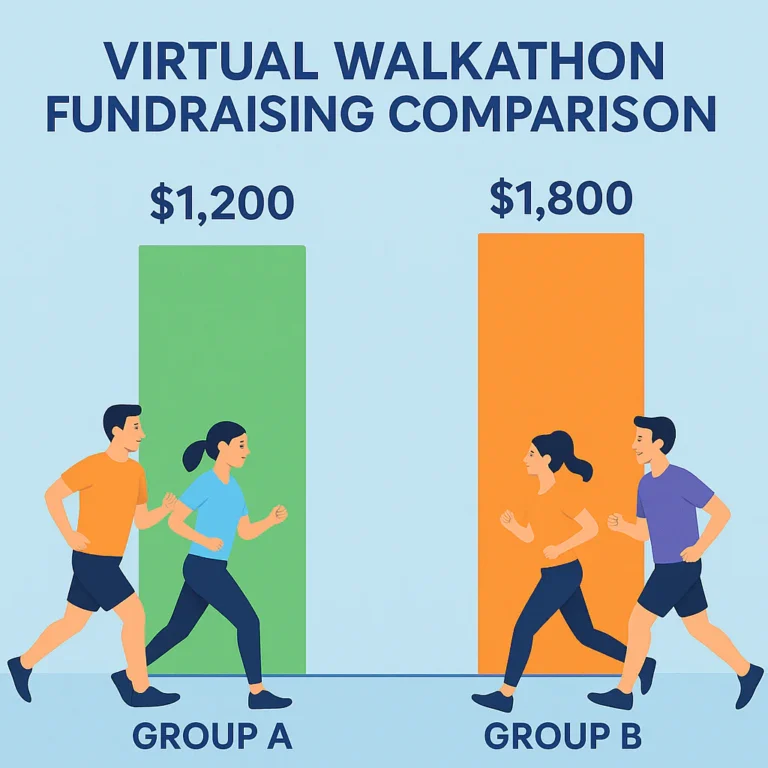
- Virtual Models Maximize Profit: By eliminating venue costs, virtual walkathons can boost net profit margins to over 70%.
Table of Contents
- ⚡️ Quick Tips and Facts
- 🕰️ The History and Evolution of the Modern Walkathon
- 💸 The Core Question: How Does a Walkathon Actually Make Money?
- 1. Registration Fees: The Entry Ticket Revenue Stream
- 2. Sponsorships: Corporate Cash and In-Kind Support
- 3. Peer-to-Peer Fundraising: The Power of Personal Networks
- 4. Merchandise Sales: T-Shirts, Water Bottles, and Swag
- 5. Corporate Matching Gifts: Doubling the Impact
- 6. Auctions, Raffles, and On-Site Add-Ons
- 🏢 Who Hosts These Events? Organizations That Profit from Walkathons
- 📊 Walkathon Revenue Breakdown: Where Does the Money Go?
- 🚀 12 Proven Strategies to Maximize Walkathon Fundraising Revenue
- 1. Gamify the Fundraising Experience with Leaderboards
- 2. Create Tiered Sponsorship Packages That Sell Themselves
- 3. Launch a Pre-Event “Early Bird” Registration Blitz
- 4. Optimize Your Mobile Donation Page for One-Click Giving
- 5. Partner with Local Businesses for In-Kind Donations
- 6. Host a Virtual Walkathon to Expand Your Geographic Reach
- 7. Utilize Social Media Challenges to Drive Viral Donations
- 8. Offer Exclusive Perks for Top Fundraisers
- 9. Implement a “Double Your Donation” Day Campaign
- 10. Sell Branded Merchandise Before, During, and After the Event
- 1. Leverage Email Marketing Sequences for Sustained Giving
- 12. Post-Event Thank You Campaigns to Secure Future Revenue
- 🛠️ The Logistics of Profit: Planning Your Walkathon for Maximum ROI
- Step 1: Assemble a Revenue-Focused Leadership Team
- Step 2: Crunch the Numbers and Set Realistic Financial Goals
- Step 3: Select the Right Walkathon Software and Payment Processors
- Step 4: Design High-Converting Event T-Shirts and Swag
- Step 5: Recruit Walkers and Secure Sponsors Early
- Step 6: Execute a Multi-Channel Promotion Strategy
- Step 7: Execute the Event with Flawless Financial Tracking
- Step 8: Analyze Data and Follow Up for Long-Term Revenue
- 🎨 Creative Walkathon Themes That Drive Higher Donations
- 📱 Virtual vs. In-Person: Which Model Generates More Revenue?
- 📈 Understanding Walkathon Metrics: Cost Per Dollar Raised
- 🏆 Case Studies: Real Walkathons That Crushed Their Revenue Goals
- 💡 Quick Tips and Facts for Aspiring Walkathon Organizers
- 🏁 Conclusion
- 🔗 Recommended Links
- ❓ FAQ: Common Questions About Walkathon Revenue
- 📚 Reference Links
⚡️ Quick Tips and Facts
Before we dive into the nitty-gritty of the cash register, let’s hit the pause button on the hype and look at the raw numbers. You might think a walkathon is just a bunch of people shuffling around a track, but the financial engine running underneath is surprisingly sophisticated.
Here is the truth about how these events generate revenue, straight from our team at Walkathon Virtual™:
- The Pledge Powerhouse: The primary revenue stream isn’t the registration fee; it’s the peer-to-peer (P2P) pledge. When a participant walks 5 miles and has 10 sponsors giving $5 per mile, that’s $250 raised from a single walker. Multiply that by 50 walkers, and you’re looking at a six-figure event without selling a single t-shirt.
- Low Overhead, High ROI: Unlike galas that require expensive venues, catering, and DJs, a walkathon can be hosted in a public park for the price of a permit and some water. This means a higher percentage of every dollar raised goes directly to the cause.
- The “Swag” Factor: Branded merchandise (think t-shirts, water bottles, and medals) acts as mobile advertising. Every time a participant wears that shirt, they are marketing your cause to their neighbors.
- Virtual vs. Physical: Virtual walkathons have exploded in popularity because they eliminate venue costs entirely, allowing organizers to keep nearly 10% of the registration and sponsorship revenue.
Did you know? According to data from the Association of Fundraising Professionals, events with strong peer-to-peer components raise 3x more than those relying solely on ticket sales.
If you’re wondering how a simple walk can fund a hospital wing or a school library, stick with us. We’re about to break down the exact mechanics of the money trail. And if you’re curious about how virtual racing platforms like “Gone for a Run” fit into this ecosystem, check out our deep dive on How Does “Gone for a Run” Work? The 2026 Guide to Virtual Racing.
🕰️ The History and Evolution of the Modern Walkathon

You might picture a walkathon as a modern phenomenon, a trendy way to raise money for cancer research or animal shelters. But the roots of this fundraising model go back much further than you’d think.
The concept of the “walkathon” (or “walk-a-thon”) actually traces its origins to the marathon dance crazes of the 1920s and 30s, where endurance was the spectacle. However, the shift from “spectator sport” to “community fundraiser” happened in the 1970s.
The Turning Point: 1970s
The modern walkathon as we know it was popularized by the March of Dimes in the United States. They needed a way to fund polio research and rehabilitation, and they realized that asking people to walk was more accessible than asking them to run a marathon.
- 1974: The first major “Walk for the Cure” events began gaining traction, utilizing the per-mile pledge model.
- 1980s: The model exploded. Organizations like the American Cancer Society adopted the “Relay for Life” concept, which combined walking with overnight endurance, creating a massive revenue engine.
- 20s: The digital revolution hit. Platforms like Classy, Givebutter, and later RallyUp and OneCause allowed organizers to track pledges in real-time, removing the need for paper pledge cards and manual data entry.
The Virtual Revolution
The pandemic of 2020 was the catalyst for the next evolution. Suddenly, physical gatherings were impossible. Organizations pivoted to virtual walkathons, allowing participants to walk their own neighborhoods, track their distance via apps like Strava or Garmin Connect, and submit results online.
This shift didn’t just save events; it expanded them. A local school in Ohio could now have a participant in Tokyo, raising money from a global network. As noted in our analysis of Global Walkathon Events, the geographic barrier to entry has been completely dismantled.
Fun Fact: The longest recorded walkathon in history wasn’t a fundraiser, but it set the stage for the endurance culture we see today. In 193, a man named John “The Walking Man” walked over 10,0 miles in a year to raise awareness for various causes.
💸 The Core Question: How Does a Walkathon Actually Make Money?
This is the million-dollar question (literally). Many people assume the money comes from the $30 registration fee you pay to sign up. Wrong. While registration fees cover the basics (t-shirts, water, permits), they are rarely the primary profit driver.
The real magic happens through a multi-stream revenue model. Let’s dissect the six pillars that make a walkathon a financial powerhouse.
1. Registration Fees: The Entry Ticket Revenue Stream
Think of registration fees as the “cover charge.” They are essential for cash flow and commitment.
- How it works: Participants pay a flat fee to join. This fee often includes a t-shirt, a medal, and a bib number.
- The Strategy: Organizers often use a “sliding scale” or “early bird” pricing to encourage early sign-ups.
- The Reality: In a well-run event, registration fees might cover 20-30% of the total revenue. The rest comes from the “ask.”
2. Sponsorships: Corporate Cash and In-Kind Support
This is where the big money hides. Corporations love walkathons because they offer brand visibility and CSR (Corporate Social Responsibility) points.
- Title Sponsors: A local bank or hospital might pay a significant sum to have their name attached to the event (e.g., “The First National Bank 5K Walk”).
- In-Kind Donations: This is a hidden revenue booster. Instead of paying cash, a local bakery donates bagels, a printing shop donates t-shirts, and a gym provides water. This reduces your operating costs, effectively increasing your net profit.
- Matching Gifts: Many companies have programs where they match employee donations dollar-for-dollar. This can double the impact of a participant’s fundraising efforts.
3. Peer-to-Peer Fundraising: The Power of Personal Networks
This is the heart and soul of the walkathon. It leverages the “social capital” of your participants.
- The Mechanism: Every participant gets a personalized fundraising page. They share it with friends, family, and colleagues.
- The Math: If a participant raises $50 from their network, and you have 20 participants, that’s $10,0 raised without the organization spending a dime on marketing.
- The Psychology: People are more likely to donate to a friend than to a faceless organization. The personal connection drives the conversion rate.
4. Merchandise Sales: T-Shirts, Water Bottles, and Swag
Merchandise is a dual-purpose revenue stream.
- Pre-Event Sales: Selling t-shirts and gear before the event generates cash flow and builds hype.
- On-Site Sales: Selling extra shirts, hats, or commemorative medals to spectators who didn’t register.
- The “Free Marketing” Effect: As mentioned earlier, every shirt worn is a billboard.
5. Corporate Matching Gifts: Doubling the Impact
We touched on this in sponsorships, but it deserves its own spotlight.
- How it works: A participant asks their employer to match their personal donation.
- The Result: A $50 donation becomes $10. This is “free money” that many organizations leave on the table because they don’t ask for it.
6. Auctions, Raffles, and On-Site Add-Ons
These are the “cherry on top” revenue streams.
- Silent Auctions: Local businesses donate gift cards, dinners, or services.
- Raffles: Sell tickets for a chance to win a prize.
- Fun Runs/Walks: Charge an extra fee for a “5K” vs. a “1K” or a “Costume Contest” entry fee.
🏢 Who Hosts These Events? Organizations That Profit from Walkathons
Walkathons aren’t just for big charities. A diverse ecosystem of organizations leverages this model.
| Organization Type | Primary Goal | Typical Revenue Use |
|---|---|---|
| Nonprofits & Charities | Mission funding | Direct program support (e.g., cancer research, animal rescue) |
| Schools & PTAs | Educational resources | Field trips, technology upgrades, library books |
| Religious Groups | Community outreach | Building projects, mission trips, local aid |
| Corporate Teams | Team building & CSR | Employee matching, community engagement |
| Recreational Clubs | Event funding | Club maintenance, travel, competitions |
| Healthcare Providers | Patient support | Research grants, patient assistance programs |
Why do they do it?
Beyond the money, walkathons build community engagement. They turn passive donors into active participants. As noted in our Health Benefits of Walkathons guide, the physical activity combined with the social aspect creates a powerful emotional bond with the cause.
📊 Walkathon Revenue Breakdown: Where Does the Money Go?
It’s not all profit. Organizers need to understand the cost structure to maximize net revenue. Here is a typical breakdown for a mid-sized walkathon:
- Venue & Permits: 10-15%
- Marketing & Promotion: 10-15%
- Swag (T-shirts, Medals, Bibs): 20-25%
- Logistics (Water, First Aid, Security): 10-15%
- Software & Payment Processing: 5-10%
- Net Revenue to Cause: 30-40% (This is considered a high ROI for events)
Note: Virtual walkathons can push the Net Revenue to 70-80% by eliminating venue and logistics costs.
🚀 12 Proven Strategies to Maximize Walkathon Fundraising Revenue
Ready to turn your walkathon into a revenue machine? Here are 12 strategies we’ve tested and refined at Walkathon Virtual™.
1. Gamify the Fundraising Experience with Leaderboards
People love competition. Use software like OneCause or RallyUp to display real-time leaderboards.
- Tactic: Create categories for “Top Fundraiser,” “Most New Donors,” and “Best Team.”
- Result: Participants push harder to climb the ranks, driving up total donations.
2. Create Tiered Sponsorship Packages That Sell Themselves
Don’t just ask for money; offer value.
- Platinum: Logo on all shirts, banner at the finish line, speaking slot.
- Gold: Logo on website, social media shout.
- Silver: Name listed on the event page.
- Tip: Make it easy for sponsors to say “yes” by providing a one-page PDF with clear benefits.
3. Launch a Pre-Event “Early Bird” Registration Blitz
Create urgency.
- Strategy: Offer a 20% discount or a limited-edition t-shirt for the first 10 registrants.
- Timing: Start this campaign 3 months out.
4. Optimize Your Mobile Donation Page for One-Click Giving
If it takes more than 3 clicks to donate, you’re losing money.
- Tech Check: Ensure your platform is mobile-responsive. Most donors will give via smartphone.
- Feature: Enable Apple Pay, Google Pay, and PayPal for frictionless giving.
5. Partner with Local Businesses for In-Kind Donations
Reduce your costs to increase your profit.
- Ask for: Water, snacks, printing services, or venue space.
- Benefit: Every dollar saved is a dollar raised.
6. Host a Virtual Walkathon to Expand Your Geographic Reach
Don’t limit yourself to your city.
- Advantage: A participant in London can raise money from their family in New York.
- Execution: Use apps like Strava or Runkeeper to track distance and submit proof.
7. Utilize Social Media Challenges to Drive Viral Donations
Create a hashtag and a challenge.
- Example: The “Walk for Water” challenge where participants post a video of their walk and tag 3 friends.
- Impact: Viral content brings in new donors who wouldn’t have heard of your cause otherwise.
8. Offer Exclusive Perks for Top Fundraisers
Motivate your top performers.
- Prizes: VIP parking, a meet-and-greet with a celebrity, or a premium gift basket.
- Psychology: People work harder when there’s a tangible reward.
9. Implement a “Double Your Donation” Day Campaign
Create a sense of urgency.
- Mechanism: A major donor agrees to match all donations made on a specific day (e.g., “Super Saturday”).
- Result: This often triggers a surge in giving as donors want to maximize their impact.
10. Sell Branded Merchandise Before, During, and After the Event
Don’t stop selling when the event ends.
- Strategy: Keep the online store open for 30 days post-event for those who missed out.
- Product: Sell “I Survived the 2024 Walk” shirts.
1. Leverage Email Marketing Sequences for Sustained Giving
Don’t let the momentum die.
- Sequence:
Week 1: Welcome & Setup Guide.
Week 2: “How to Ask for Pledges” Tips.
Week 3: “You’re 50% There!” Encouragement.
Week 4: “Final Push” Reminder.
12. Post-Event Thank You Campaigns to Secure Future Revenue
The event isn’t over until you say thank you.
- Action: Send personalized video messages or handwritten notes top donors.
- Outcome: Donors who feel appreciated are 3x more likely to donate again next year.
🛠️ The Logistics of Profit: Planning Your Walkathon for Maximum ROI
Planning a walkathon is like training for a marathon: you need a plan, a timeline, and the right gear. Here is our step-by-step guide to organizing a profitable event.
Step 1: Assemble a Revenue-Focused Leadership Team
You can’t do it alone. You need a team with specific skills:
- Event Director: The visionary.
- Fundraising Captain: The one who chases pledges.
- Logistics Lead: The one who handles permits and water.
- Marketing Guru: The one who gets the word out.
Step 2: Crunch the Numbers and Set Realistic Financial Goals
Don’t guess. Do the math.
- Formula: (Target Revenue – Estimated Costs) = Net Goal.
- Breakdown: If you need $50,0 net, and costs are $10,0, you need to raise $60,0 gross.
- Projection: If your average walker raises $30, you need 20 walkers.
Step 3: Select the Right Walkathon Software and Payment Processors
The wrong platform can kill your revenue.
- Key Features to Look For:
- Customizable fundraising pages.
- Automated email reminders.
- Real-time reporting.
- Mobile optimization.
- Top Picks: RallyUp, OneCause, Classy, Givebutter.
Pro Tip: Check the transaction fees. Some platforms charge a flat fee, while others take a percentage of every donation. This can add up quickly!
Step 4: Design High-Converting Event T-Shirts and Swag
Your t-shirt is your first marketing tool.
- Design: Make it cool enough that people want to wear it after the event.
- Ordering: Order early to avoid rush fees. Use platforms like Bonfire or CustomInk for easy design and fulfillment.
Step 5: Recruit Walkers and Secure Sponsors Early
Start recruiting 6 months in advance.
- Sponsors: Reach out to local businesses first. They are more likely to say yes than national corporations.
- Walkers: Tap into your existing donor database and social media followers.
Step 6: Execute a Multi-Channel Promotion Strategy
Don’t rely on just one channel.
- Channels: Email, Social Media, Local News, Community Boards, Word of Mouth.
- Content: Share stories of why the cause matters. People give to people, not just causes.
Step 7: Execute the Event with Flawless Financial Tracking
On the day of the event, keep the money flowing.
- Tech: Have tablets ready for on-site donations.
- Staff: Train volunteers to ask for donations at the finish line.
- Contingency: Have a plan for bad weather or technical glitches.
Step 8: Analyze Data and Follow Up for Long-Term Revenue
The real work starts after the event.
- Data: Who donated? Who walked? Who didn’t show up?
- Follow-up: Send a “Thank You” email within 48 hours. Share the total amount raised.
- Retention: Add new donors to your mailing list for future campaigns.
🎨 Creative Walkathon Themes That Drive Higher Donations
A boring walk is a hard sell. A themed walk is an event people want to attend. Here are some themes that have proven to boost registration and donations:
- The “Color Run” Walk: Participants get doused in colored powder. High energy, great for photos, and very shareable on social media.
- The “Superhero” Walk: Perfect for children’s hospitals. Participants dress up as their favorite heroes.
- The “Paws for a Cause” Walk: Bring your dog! Animal lovers are a huge demographic for fundraising.
- The “Decades” Walk: Dress in fashion from the 50s, 60s, 70s, etc. Great for alumni groups.
- The “Night Glow” Walk: A walk at night with LED lights and glow sticks. Creates a magical atmosphere.
Insight: According to a study by Eventbrite, themed events see a 25% increase in registration compared to standard events.
📱 Virtual vs. In-Person: Which Model Generates More Revenue?
This is the great debate. Let’s look at the numbers.
| Feature | In-Person Walkathon | Virtual Walkathon |
|---|---|---|
| Venue Cost | High (Permits, Insurance, Security) | $0 (Participants walk anywhere) |
| Logistics | Complex (Water, First Aid, Traffic) | Minimal (Shipping swag only) |
| Geographic Reach | Local (City/Region) | Global (Worldwide) |
| Sponsorship Potential | High (On-site visibility) | Moderate (Digital visibility) |
| Donor Acquisition | Moderate (Local network) | High (Global network) |
| Net Profit Margin | 30-40% | 60-80% |
The Verdict?
- In-Person is better for community building and high-value local sponsorships.
- Virtual is better for maximizing profit margins and reaching a global audience.
The Hybrid Model:
The future is hybrid. Host a local event for the community, but allow virtual participants to join from anywhere. This gives you the best of both worlds: the energy of a live event and the reach of a global campaign.
📈 Understanding Walkathon Metrics: Cost Per Dollar Raised
To run a successful walkathon, you need to speak the language of finance. The most important metric is the Cost Per Dollar Raised (CPDR).
- Formula: Total Event Costs / Total Funds Raised.
- Benchmark: A good CPDR is $0.20 to $0.30. This means for every dollar raised, you spent 20-30 cents.
- Bad CPDR: Anything over $0.50 indicates inefficiency.
- How to Improve:
- Reduce venue costs (go virtual or use a free park).
- Increase sponsorship revenue (which covers costs without touching donations).
- Optimize marketing spend (focus on organic social media).
🏆 Case Studies: Real Walkathons That Crushed Their Revenue Goals
Let’s look at some real-world examples of walkathons that hit the jackpot.
Case Study 1: The “Mito 5K” (UC San Diego Moores Cancer Center)
- Goal: Raise $50,0.
- Strategy: Leveraged a strong peer-to-peer network and a compelling theme (mitochondrial disease awareness).
- Result: Raised $97,024 on its 10th anniversary.
- Key Takeaway: Consistency and a strong community narrative drive long-term success.
Case Study 2: The “Heart of a Child Walk” (Children’s Heart Foundation)
- Goal: $85,0.
- Strategy: Focused on emotional storytelling and family engagement.
- Result: Raised $92,421.
- Key Takeaway: Tapping into the emotional core of the cause (children’s health) creates powerful donor connections.
Case Study 3: The “Atlanta Walk & Roll” (FSHD Society)
- Goal: $40,0.
- Strategy: Included a “Roll” component for wheelchair users, ensuring inclusivity.
- Result: Raised $4,104 (Note: This was a smaller, community-focused event, but it exceeded its goal by 10% and built a loyal base).
- Key Takeaway: Accessibility expands your donor base. When everyone feels welcome, everyone gives.
💡 Quick Tips and Facts for Aspiring Walkathon Organizers
Before you head off to plan your event, here are a few final nugets of wisdom from the Walkathon Virtual™ team:
- Start Early: The “sweet spot” for planning is 6 to 8 weeks before the event. Anything less, and you’re fighting a losing battle against time.
- Don’t Ignore the “No”: Rejection is part of the process. If a sponsor says no, ask for a smaller donation or an in-kind contribution.
- Mobile First: 70% of your donations will come from mobile devices. Test your donation page on a phone before you launch.
- The Power of “Why”: Always explain why the money matters. “We need $50,0” is boring. “Your $50,0 will fund 10 hours of cancer research” is compelling.
- Follow Up: The event is over when you say thank you. Don’t skip this step.
Final Thought: Remember, a walkathon is more than a fundraiser; it’s a movement. It’s about bringing people together to make a difference. And when you get that right, the money follows.
🏁 Conclusion
So, how does a walkathon make money? It’s not magic, and it’s not just about walking. It’s a carefully orchestrated symphony of peer-to-peer fundraising, corporate sponsorships, strategic merchandise sales, and community engagement.
The most successful walkathons are those that understand the human element. They empower participants to become ambassadors, they offer sponsors real value, and they create an experience that people want to be part of. Whether you choose an in-person event, a virtual one, or a hybrid model, the key is to focus on net revenue and donor retention.
As we’ve seen, the potential for revenue is massive. From raising $5,0 for a school project to $10,0+ for a national charity, the sky is the limit. The only thing standing between you and a successful event is a solid plan and the willingness to execute it.
Ready to get started?
Don’t let the logistics scare you. With the right tools and a clear strategy, you can turn a simple walk into a financial powerhouse for your cause.
Check out our recommended tools and platforms below to get your event off the ground!
🔗 Recommended Links
Event Planning & Fundraising Platforms:
- RallyUp: RallyUp Fundraising Platform
- OneCause: OneCause Peer-to-Peer Software
- Classy: Classy Fundraising Software
- Givebutter: Givebutter Donation Platform
Merchandise & Swag:
- Bonfire: Bonfire Custom T-Shirts
- CustomInk: CustomInk Event Gear
- Vistaprint: Vistaprint Event Marketing
Books & Resources:
- The Ultimate Guide to Fundraising by Barbara Schindler – Available on Amazon
- Nonprofit Fundraising Strategies by David A. Smith – Available on Amazon
❓ FAQ: Common Questions About Walkathon Revenue
What are the benefits of joining virtual walkathons for fundraising?
Virtual walkathons offer lower overhead costs, global reach, and flexibility for participants. They allow organizations to raise money without the logistical nightmare of venue rentals and permits, often resulting in a higher net profit margin.
Read more about “🚶 ♀️ Virtual vs. Traditional Walkathons: 7 Key Benefits (2026)”
How can virtual walkathons attract more donors?
By removing geographic barriers, virtual walkathons allow participants to tap into their global networks. A participant in a small town can easily solicit donations from friends and family in major cities or even other countries, significantly expanding the donor base.
Read more about “🚶 ♀️ How to Do a Virtual Walk Fundraiser: 10 Steps to Success (2026)”
What role do registration fees play in walkathon income?
Registration fees act as a baseline revenue stream and a commitment tool. While they rarely cover the full cost of the event, they ensure that participants are invested in the cause and help cover initial expenses like t-shirts and permits.
How do sponsors contribute to walkathon fundraising?
Sponsors provide direct cash donations and in-kind contributions (like water, printing, or venue space). They also offer brand visibility in exchange for their support, which helps offset marketing costs and increases the event’s credibility.
Read more about “📊 15 Metrics for Virtual Walkathon Impact Reporting (2026)”
Can participants raise money individually in a virtual walkathon?
Absolutely. In fact, individual fundraising is the primary revenue driver in most walkathons. Participants create personal pages, share them on social media, and collect pledges from their networks, often raising more than the registration fee itself.
Read more about “🌍 15 Top Global Virtual Step Challenges to Conquer in 2026”
What are common fundraising methods used in walkathons?
Common methods include per-mile pledges, flat donations, sponsorship packages, merchandise sales, raffles, and matching gift campaigns. The most successful events combine several of these methods.
Read more about “🚶 ♀️ Are Virtual Walkathons for Everyone? (2026 Guide)”
How do virtual walkathons generate revenue?
Virtual walkathons generate revenue through online registration fees, digital pledges, virtual merchandise sales, and corporate sponsorships that support the digital platform. The elimination of physical costs often leads to higher net profits.
Read more about “12 Fun Ways to Make Your Virtual Walkathon Unforgettable (2025) 🚶 ♀️”
Can individuals or teams create their own virtual walkathon events to raise money for a favorite charity?
Yes. Many platforms allow individuals or teams to create their own fundraising pages for a specific charity. This is a great way to raise money for a cause without the burden of organizing a full-scale event.
What are the typical costs associated with organizing a walkathon event?
Typical costs include venue permits, insurance, marketing, t-shirts/medals, water/snacks, security, and software fees. Virtual events significantly reduce these costs by eliminating venue and logistics expenses.
Read more about “🚶 ♀️ 7 Steps to a Viral Virtual Walkathon for Schools (2026)”
How do virtual walkathons impact fundraising for charities and causes?
Virtual walkathons have democratized fundraising, allowing smaller organizations to compete with larger ones. They also foster a sense of global community and allow for year-round fundraising rather than just a single event day.
Read more about “🏃 ♂️ Create Your Own Virtual Race Free: 5 Steps to Launch (2026)”
What are the benefits of participating in a virtual walkathon?
Participants enjoy flexibility (walk anytime, anywhere), lower registration fees, and the ability to support a cause without traveling. It’s also a great way to stay active and connected with a community of like-minded individuals.
Read more about “🚶 ♀️ 10 Benefits of Joing a Virtual Walkathon for Charity (2026)”
What are the benefits of a walkathon?
Walkathons combine physical activity, community building, and fundraising. They are accessible to people of all ages and fitness levels, making them an inclusive way to support a cause.
Read more about “What are the benefits of a walkathon?”
How does a walkathon raise money?
Walkathons raise money primarily through peer-to-peer pledges, registration fees, sponsorships, and merchandise sales. The “ask” is the key: participants ask their networks to support them as they walk.
Read more about “How does a walkathon raise money?”
Do walkathons raise money?
Yes. Walkathons are one of the most effective and popular fundraising methods for nonprofits, schools, and community groups. With the right strategy, they can raise significant amounts of money for a cause.
Read more about “🏃 ♂️ How Does “Gone for a Run” Work? The 2026 Guide to Virtual Racing”
How do you get sponsors for a walkathon?
Start with local businesses and existing donors. Create a sponsorship package that outlines the benefits (logo placement, social media mentions, etc.). Follow up personally and be persistent.
Read more about “How do you get sponsors for a walkathon?”
What is the point of a walkathon?
The point is to raise money for a cause while building community and promoting health. It’s a way to bring people together to make a tangible difference in the world.
Read more about “What is the point of a walkathon?”
📚 Reference Links
- RallyUp: Walkathon Fundraiser: How to Host and Raise More
- Bonfire: How Walkathons Work
- OneCause: The Ultimate Guide to Walkathons
- Association of Fundraising Professionals: Fundraising Statistics
- March of Dimes: History of the Walkathon
- Strava: Virtual Running and Walking
- Garmin: Garmin Connect for Event Tracking