Support our educational content for free when you purchase through links on our site. Learn more
Can I Track a Virtual Walkathon With an App? 📱

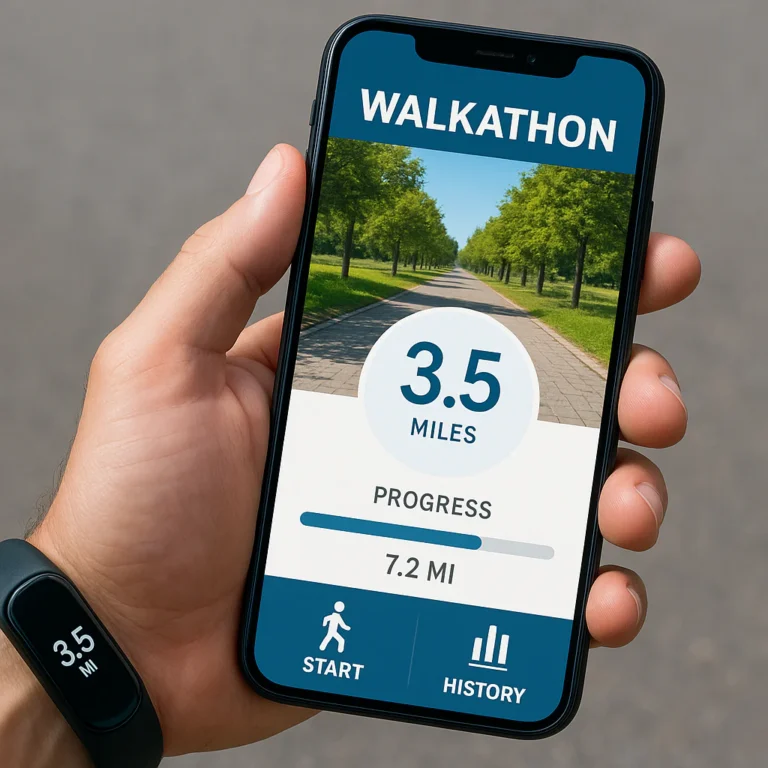
Yes—you can track your progress in a virtual walkathon using an app, with GPS, step counts, a smartwatch, or manual activity entries. The best method depends on your event’s rules, so check what the organizer accepts before you start walking.
We’ve seen enthusiastic walkers finish a great session, then discover their fitness app didn’t sync with the event platform. A quick test walk beforehand can prevent that little plot twist—and help you confirm your distance, steps, and submission method while the stakes are still delightfully low.
Key Takeaways
- Virtual walkathon progress can usually be tracked with an app, but accepted methods vary by event.
- Check the rules first to see if you need GPS, step tracking, a connected wearable, or manual proof.
- Test your setup before event day and keep a backup record, such as an activity screenshot.
- Protect your privacy and walk safely: review app permissions, avoid sharing live routes, and put your phone away while moving.
Table of Contents
- ⚡️ Quick Tips and Facts: Tracking Your Virtual Walkathon
- 👟 Virtual Walkathon Tracking: How Apps Record Your Progress
- What counts as progress: distance, steps, time, and elevation
- How virtual walkathons differ from in-person events
- 📱 Choosing a Virtual Walkathon App
- Event-specific apps versus general fitness trackers
- Features to look for: GPS, step tracking, maps, and milestones
- Compatibility with Apple Health, Google Fit, Fitbit, and Garmin
- Free apps, subscriptions, and what to check before signing up
- 🛠️ How to Set Up App Tracking Before Your Walk
- Create an account and join the right virtual walkathon
- Set permissions for location, motion, and health data
- Connect your watch or fitness tracker
- Test a short walk and check your battery settings
- 🚶 How to Track Your Walkathon Progress Step by Step
- Start, pause, resume, and save a walking session
- Track outdoor walks with GPS
- Track indoor walking, treadmill sessions, and steps
- Upload activity manually or sync it from another app
- 📊 Understanding Your Walkathon Stats and Milestones
- Distance, steps, pace, duration, and calories explained
- Route maps, virtual milestones, badges, and leaderboards
- Why app totals may differ from your watch or phone
- 🔒 Privacy, Permissions, and Location Safety
- What location and health information apps may collect
- Reviewing privacy settings and sharing options
- Keeping your routes and personal details safe
- ♿️ Making App-Based Walkathon Tracking More Accessible
- Options for mobility aids and different walking speeds
- Tracking with limited internet, phone access, or battery life
- 🧭 Staying Motivated and Building a Walking Routine
- Set a realistic distance or step goal
- Use reminders, progress charts, and virtual checkpoints
- Invite friends, join a team, and celebrate milestones
- 🩺 Walking Safely While You Track
- Phone placement, headphones, and staying alert
- Pacing, hydration, footwear, and rest days
- When to stop and seek medical advice
- 🔧 Troubleshooting Common App Tracking Problems
- GPS is inaccurate or the route map is missing
- Steps or distance are not syncing
- A walk was lost, duplicated, or recorded incorrectly
- App crashes, background tracking, and battery drain
- ✅ Submitting and Verifying Your Virtual Walkathon Activities
- Automatic syncing versus manual activity submission
- Accepted activity types and proof of completion
- Checking event rules, deadlines, and finisher rewards
- 💡 Quick Tips for More Reliable Walkathon Tracking
- 🏁 Conclusion
- 🔗 Recommended Links
- ❓ FAQ
- Can I track my progress in a virtual walkathon using an app?
- Do I need GPS to track a virtual walkathon?
- Can I use Apple Health, Google Fit, Fitbit, or Garmin?
- Can I count treadmill walking or indoor steps?
- Can I track a walk without carrying my phone?
- What should I do if my app does not record my distance?
- Are virtual walkathon tracking apps safe for my privacy?
- 📚 Reference Links
Table of Contents
- ⚡️ Quick Tips and Facts: Tracking Your Virtual Walkathon
- 👟 Virtual Walkathon Tracking: How Apps Record Your Progress
- What counts as progress: distance, steps, time, and elevation
- How virtual walkathons differ from in-person events
- 📱 Choosing a Virtual Walkathon App
- Event-specific apps versus general fitness trackers
- Features to look for: GPS, step tracking, maps, and milestones
- Compatibility with Apple Health, Google Fit, Fitbit, and Garmin
- Free apps, subscriptions, and what to check before signing up
- 🛠️ How to Set Up App Tracking Before Your Walk
- Create an account and join the right virtual walkathon
- Set permissions for location, motion, and health data
- Connect your watch or fitness tracker
- Test a short walk and check your battery settings
- 🚶 How to Track Your Walkathon Progress Step by Step
- Start, pause, resume, and save a walking session
- Track outdoor walks with GPS
- Track indoor walking, treadmill sessions, and steps
- Upload activity manually or sync it from another app
- 📊 Understanding Your Walkathon Stats and Milestones
- Distance, steps, pace, duration, and calories explained
- Route maps, virtual milestones, badges, and leaderboards
- Why app totals may differ from your watch or phone
- 🔒 Privacy, Permissions, and Location Safety
- What location and health information apps may collect
- Reviewing privacy settings and sharing options
- Keeping your routes and personal details safe
- ♿️ Making App-Based Walkathon Tracking More Accessible
- Options for mobility aids and different walking speeds
- Tracking with limited internet, phone access, or battery life
- 🧭 Staying Motivated and Building a Walking Routine
- Set a realistic distance or step goal
- Use reminders, progress charts, and virtual checkpoints
- Invite friends, join a team, and celebrate milestones
- 🩺 Walking Safely While You Track
- Phone placement, headphones, and staying alert
- Pacing, hydration, footwear, and rest days
- When to stop and seek medical advice
- 🔧 Troubleshooting Common App Tracking Problems
- GPS is inaccurate or the route map is missing
- Steps or distance are not syncing
- A walk was lost, duplicated, or recorded incorrectly
- App crashes, background tracking, and battery drain
- ✅ Submitting and Verifying Your Virtual Walkathon Activities
- Automatic syncing versus manual activity submission
- Accepted activity types and proof of completion
- Checking event rules, deadlines, and finisher rewards
- 💡 Quick Tips for More Reliable Walkathon Tracking
- 🏁 Conclusion
- 🔗 Recommended Links
- ❓ FAQ
- Can I track my progress in a virtual walkathon using an app?
- Do I need GPS to track a virtual walkathon?
- Can I use Apple Health, Google Fit, Fitbit, or Garmin?
- Can I count treadmill walking or indoor steps?
- Can I track a walk without carrying my phone?
- What should I do if my app does not record my distance?
- Are virtual walkathon tracking apps safe for my privacy?
- 📚 Reference Links
⚡️ Quick Tips and Facts: Tracking Your Virtual Walkathon
Yes—you can track your virtual walkathon progress with an app. Depending on the event, your activity may be captured by GPS, counted as steps, synced from a smartwatch, or entered manually. The catch? The event organizer decides which tracking methods count for official results, so check the rules before your first walk.
If you’re new to the format, our guide to how a virtual walkathon works explains how participants can take part from different locations while still working toward a shared goal. 🌍
| Quick question | Helpful answer |
|---|---|
| Do I need a special event app? | Not always. Some organizers provide an app; others accept Apple Health, Fitbit, Garmin, another tracker, or manual proof. |
| Do I need GPS? | Only if your event requires a mapped route. Step-based or manual reporting may work without GPS. |
| Can I add several short walks? | Often, yes—but confirm whether the event accepts cumulative activity. |
| Can I walk on a treadmill? | Many virtual events allow indoor activity, but rules vary. |
| What should I save? | Keep a screenshot or activity record showing the date, distance or steps, and duration if available. |
| What matters most? | Use a tracking method the event accepts, test it before event day, and keep a backup record. |
Trainer tip: We recommend a five-minute test walk before you commit to a long session. It’s much nicer to discover a permission problem around the block than after a triumphant 10,000-step trek. For safer routes and sensible pacing, browse our health benefits of walkathons resources.
👟 Virtual Walkathon Tracking: How Apps Record Your Progress
Virtual walkathons let participants complete activity from different places, often over several days or weeks. A tracking app turns those walks into a record you can review, share, or submit to the organizer. Our experience with Join Virtual Walkathons Worldwide is that the best setup is not necessarily the fanciest one. It’s the one you understand and can reliably use.
As Bonfire’s walkathon guide puts it, using a smartwatch or free mobile app can be “the easiest and most reliable way” for participants to report results. That’s a useful general recommendation, but it isn’t a universal event rule: some organizers accept manual submissions, while others require a particular platform.
What counts as progress: distance, steps, time, and elevation
Different events measure progress differently. Before choosing an app, find out whether your challenge is based on miles or kilometers, steps, walking time, or a combination.
| Measurement | What it tells you | What to check |
|---|---|---|
| Distance | How far you walked or traveled | Whether the event accepts GPS, synced, or manually entered distance |
| Steps | Your accumulated footfalls | Whether the organizer converts steps to distance or sets a step target |
| Duration | Time spent moving | Whether pauses are included or only active time counts |
| Pace | Time taken per unit of distance | Usually a personal progress measure, not an event requirement |
| Elevation | Approximate climbing during a route | Rarely needed for a standard walkathon |
| Calories | An estimate of energy expenditure | Not a precise measure and generally not the best event-completion metric |
A step goal can suit people who prefer to spread activity across the day. A distance goal may be easier to verify if the event asks for a route recording. Don’t assume that a step count automatically equals an accepted distance—the organizer’s rules have the final say.
How virtual walkathons differ from in-person events
In a traditional event, organizers can measure a marked course or record a finish line. In a virtual walkathon, participants may walk at home, on a local path, or on a treadmill, so apps and activity records help connect those separate efforts.
The first featured video takes the organizer’s perspective, presenting Charity Footprints as a way for nonprofits to run scalable, location-flexible fundraising challenges. Its emphasis is on reach and engagement; for participants, the practical question is more basic: How will my walk be recorded and accepted? Get that answer before you start.
Virtual events can also support fundraising and community participation. Organizers looking for ideas can explore our guides to walkathon fundraising and event promotion. Participants can find more opportunities through global walkathon events.
📱 Choosing a Virtual Walkathon App
There isn’t one best app for every event. The right choice depends on your organizer’s submission rules, the device you own, where you walk, and whether you want a simple activity log or a more game-like experience.
| App or platform | Best known for | Potential advantage | Check before relying on it |
|---|---|---|---|
| Strava | GPS-recorded activities and social features | Useful for route-based outdoor walks | Confirm how your event accepts or verifies Strava activities |
| Apple Fitness and Apple Health | Activity history and Apple-device integration | Convenient for people already using iPhone or Apple Watch | Availability and data sharing depend on device, settings, and event integration |
| Google Fit | Activity and health data on supported devices | Can collect activity information from connected apps and devices | Google Fit integrations and supported features can vary |
| Fitbit | Step and activity tracking with Fitbit devices | Handy for daily step goals and wearable tracking | Check device sync, event compatibility, and how manual entries are handled |
| Garmin Connect | Garmin-device activity and health records | Detailed activity history for compatible Garmin devices | The event may require a file, screenshot, or third-party connection |
| The Conqueror Challenge App | Themed virtual challenges | Combines activity logging with virtual route progress and challenge content | Check accepted activity types, device connections, and challenge-specific rules |
| JomRun | Event registration and activity submissions for supported events | A single event platform may simplify tracking and reporting | Features depend on the particular JomRun event |
These platforms aren’t interchangeable. An app can record an activity accurately yet still fail to submit it in the format your event needs. That’s why we check the event’s rules first, then choose the simplest compatible tracking method.
Event-specific apps versus general fitness trackers
An event-specific app may combine registration, activity tracking, progress, and result submission. A general fitness app is often better for everyday walking, route records, and device history. Some events accept either; others provide a dedicated platform.
A historical JomRun Laksamana Walkathon listing described both in-app tracking and manual submission using evidence from another device. It also allowed activity to be accumulated across multiple walks. That listing concerned a past 2021 event, so treat it as an example of possible formats—not as current registration or submission instructions.
The Conqueror’s website describes connecting fitness trackers or entering activities manually, alongside virtual challenge progress. Its format may appeal to people who enjoy themed milestones; a plain GPS app may suit someone who wants a straightforward distance log. Neither approach is automatically better. Choose for your event and your motivation style.
Features to look for: GPS, step tracking, maps, and milestones
Before installing anything, scan the feature list for these essentials:
- Accepted activity tracking: GPS distance, steps, manual entry, or device sync.
- Reliable saving: The app should preserve recorded activity if your phone briefly loses signal.
- Clear totals: You should be able to see what counts toward your challenge.
- Data export or evidence: Screenshots or activity histories can help with manual submissions.
- Privacy controls: Look for options to limit public route or profile sharing.
- Accessibility and indoor options: Check whether you can log treadmill sessions or use alternatives to GPS.
- Motivation tools: Progress bars, virtual checkpoints, badges, and team leaderboards are extras—not a substitute for compatible tracking.
For app details and supported features, consult the platform’s own Strava support pages, Apple Health information, Google Fit help, and Fitbit help.
Compatibility with Apple Health, Google Fit, Fitbit, and Garmin
Many people already own a step-counting watch or use a health app. You may be able to connect it to your event platform, but a device showing the data on your phone does not guarantee that the event app can import it.
| Your tracking setup | What to confirm |
|---|---|
| iPhone or Apple Watch | Whether the event app can read Apple Health activity and what permissions it requests |
| Android phone | Whether the event supports Google Fit, Health Connect, or a direct app connection |
| Fitbit device | Whether the event accepts Fitbit sync, a connected service, screenshots, or manual entry |
| Garmin watch | Whether activities can sync to the event platform or be submitted as evidence |
| No wearable | Whether phone-based GPS, phone step counting, or manual submission is allowed |
Pairing instructions can change as software updates roll out. Use the current official support page for your device or app, then run a short test and verify that the event platform receives the activity.
Free apps, subscriptions, and what to check before signing up
Some apps offer basic activity tracking at no cost; others reserve selected features for a subscription or require an event registration. You do not need a paid fitness app unless its specific features are useful to you and allowed by the event.
Check these details before creating an account:
- Whether activity logging is free or requires a paid plan.
- Whether the event itself has separate registration requirements.
- Whether the app shares profile, health, or location data.
- Whether a paid feature is needed for route maps, exports, or device syncing.
- Whether you can delete your account and data later.
- Whether the organizer requires proof in a specific format.
Avoid signing up for extra apps just because a promotional page promises more badges. A simple record you can submit is better than a dazzling dashboard that doesn’t connect to your event.
🛠️ How to Set Up App Tracking Before Your Walk
A little setup now can save a lot of “why is my watch talking to the wrong app?” later. Follow these steps before your event begins.
Create an account and join the right virtual walkathon
- Confirm the event name and dates. Events with similar names can have different rules organizers.
- Register through the organizer’s official website or platform.
- Read the activity rules: accepted activities, minimums, cumulative totals, reporting deadlines, and proof requirements.
- Join the correct event in the app. Check your name, team, category, and challenge distance.
- Save the submission instructions. Keep a screenshot or bookmark the page so it’s handy later.
If your event is raising money, check how activity and fundraising progress are displayed. Walkathons can be effective community campaigns, but individual participant tracking and donation tracking may be handled separately.
Set permissions for location, motion, and health data
Your phone may ask for permission to access location, motion, fitness, or health information. Grant only the access needed for the tracking method you plan to use.
- GPS route recording: The app may need location access while you record.
- Step counting: Motion and fitness permissions may be necessary.
- Health-platform sync: You may need to approve access separately within Apple Health or another service.
- Background activity: Some phones restrict tracking when the app is minimized; review battery and background settings if needed.
You can review app permissions through your phone’s settings. For guidance, see Apple’s location services controls and Android’s app permissions guidance. Menus vary by operating-system version, so follow the current instructions for your device.
Connect your watch or fitness tracker
The usual pairing process looks like this:
- Update the watch, phone app, and event app.
- Open the wearable’s official app—such as Fitbit or Garmin Connect—and confirm the device is syncing.
- In the event platform, look for Connected Apps, Devices, or Integrations.
- Select the service you use and approve only the requested permissions.
- Record a short walk with your normal device.
- Open the event dashboard and check whether the activity appears in the right challenge.
If you don’t see a direct connection, don’t panic. Your event may accept a manual upload or screenshot instead. Ask the organizer before attempting a workaround.
Test a short walk and check your battery settings
Take a short test walk before event day. Confirm that:
- The activity starts and ends as expected.
- Distance or steps appear in your tracker.
- The event app receives or accepts the activity.
- The recorded date and time look right.
- Your phone’s battery settings aren’t stopping background recording.
If you’ll be walking for a long stretch, start with a well-charged device and carry a power bank if you normally rely on phone GPS. You don’t need a gadget parade; you just want the app to make it to the finish line with you. 🔋
🚶 How to Track Your Walkathon Progress Step by Step
Start, pause, resume, and save a walking session
For a GPS-tracked walk, a typical workflow is:
- Open the app and choose Walk or the event’s activity mode.
- Wait for GPS to settle if the app uses location.
- Tap Start only when you’re ready to move.
- Pause at long stops if the app’s rules require active time or continuous tracking.
- Tap Finish or Save at the end.
- Review the activity before closing the app.
- Check that it appears in your event total or save a screenshot for submission.
The labels differ by app. Some event platforms count daily steps automatically, while others require you to record each session. Read the event’s instructions rather than assuming every walk logs itself.
Track outdoor walks with GPS
GPS is useful for capturing an outdoor route and estimating distance, but accuracy can be affected by tall buildings, dense tree cover, poor satellite reception, and phone placement. Start in an open area when possible, keep the phone secure, and allow location access while recording.
For safety, don’t stare at the screen while crossing streets. Start the recording before you begin, put the phone away, and check it only when stopped. If your event needs a route map, preview the saved record after your walk to spot obvious gaps or GPS jumps.
Track indoor walking, treadmill sessions, and steps
GPS generally cannot trace your treadmill route indoors, so use a step counter, wearable treadmill activity, or manual entry if the organizer allows it. The CDC’s physical activity guidance recognizes walking as an activity option; however, an event’s rules determine which indoor activities count for its completion requirements.
A treadmill may display a different distance from your watch. That can happen because the equipment and wearable use different calibration or motion data. If the event accepts treadmill activity, follow its preferred evidence method—often an activity record or screenshot.
Some challenges, including those described by The Conqueror, offer activity types beyond outdoor walking. Confirm the rules for your specific challenge rather than assuming every exercise counts.
Upload activity manually or sync it from another app
If automatic sync isn’t available:
- Open your event dashboard and find Add Activity, Submit Results, or similar.
- Enter the requested information, usually date and distance or steps.
- Upload evidence if the event asks for it.
- Double-check the units—miles and kilometers are an easy source of accidental math.
- Save the submission confirmation.
A screenshot should show enough detail to support the activity without exposing unnecessary personal information. If you’re uncertain whether an image or tracker export is acceptable, ask the organizer before the deadline.
📊 Understanding Your Walkathon Stats and Milestones
Distance, steps, pace, duration, and calories explained
Apps show a lot of numbers; not all of them are equally useful. For completing a virtual walkathon, prioritize the measurement your event actually requires.
- Distance: Often the clearest measure for a mileage challenge.
- Steps: Useful for daily goals or step-based events, but step length differs from person to person.
- Duration: Helps you understand time spent walking, though some events don’t use it for scoring.
- Pace: A training metric; it is not a measure of effort or health on its own.
- Calories: An estimate, not a precise measurement. Don’t use it as your only indicator of workout value.
Wearables and phones estimate these numbers using sensors and algorithms. A result can be useful for tracking your own trend without being exact enough for every official purpose.
Route maps, virtual milestones, badges, and leaderboards
Some apps display a route map, while others turn activity into progress along a virtual journey. Milestones and badges can add a little cheer when your route currently consists of neighborhood sidewalks and one extremely familiar park bench. 🏅
The Conqueror promotes virtual challenges with route progress and themed content; its site also describes physical finisher medals for completed challenges. Those extras can help some participants stay engaged, but they’re not required to make walking worthwhile. If competition feels stressful, hide or ignore leaderboards and track your own progress instead.
Why app totals may differ from your watch or phone
Different devices may show different steps or distance because they use different sensors, algorithms, step-length estimates, and GPS conditions. Other common causes include:
- One app counts steps all day; another records only a started activity.
- A watch syncs late or imports an activity twice.
- GPS briefly loses signal or traces an irregular route.
- A treadmill and wearable use different distance estimates.
- The event platform converts steps into distance using its own method.
- Activity is recorded in different units or time zones.
If you’re reporting results, follow the event’s stated source of truth. Don’t add together totals from two synced devices unless the organizer explicitly tells you to; duplicate activity can inflate your result.
🔒 Privacy, Permissions, and Location Safety
What location and health information apps may collect
A tracking app may handle information such as your name, activity time, distance, steps, route, device details, or connected health data. What it collects depends on the app, the permissions you grant, and the service’s privacy policy.
Before connecting services, check the app’s privacy information and the platform’s own controls. Apple explains its approach to Health data and privacy; Google provides information about Fit and connected apps. These resources help you understand settings, but the event provider’s policy still matters too.
Reviewing privacy settings and sharing options
You can often take part without making every walk public. Review settings for:
- Public profiles and activity feeds.
- Live location sharing.
- Route visibility.
- Leaderboard display names.
- Social media connections.
- Health-data permissions.
A practical default is to share only what helps you participate. If the event needs a distance total, it may not need your home address or a publicly visible route starting at your front door.
Keeping your routes and personal details safe
- Don’t post a live route while you’re still walking it.
- Consider hiding your home or work location on shared maps.
- Use a display name if the event permits it.
- Check who can see team or leaderboard details.
- Avoid sharing screenshots that reveal account IDs or private information.
- Use a secure account password and enable available security protections.
For guidance on making walkathons more welcoming and adaptable, explore our resources on accessibility in walkathons.
♿️ Making App-Based Walkathon Tracking More Accessible
Options for mobility aids and different walking speeds
A virtual event can make it easier to choose a route, pace, and schedule that suit you, but accessibility depends on the organizer and tracking system. Ask whether the event accepts:
- Accumulated activity across multiple sessions.
- Indoor movement or treadmill sessions.
- Manual entries when a device cannot reliably track your activity.
- Wheelchair or mobility-aid activity, if relevant to the event.
- Flexible completion windows or distance options.
- Alternative proof methods.
An app’s default activity labels may not represent every participant’s movement. Contact organizers about an accommodation before the event, and ask them to confirm what evidence they can accept. Our accessibility in walkathons category offers related planning ideas.
Tracking with limited internet, phone access, or battery life
Many GPS apps can record an activity without continuous mobile data, but account login, map loading, syncing, or final submission may require connectivity. Test your app in the conditions you expect.
If your phone access or battery is limited:
- Use a watch or pedometer if the event accepts it.
- Save the activity locally and sync later when you have a connection.
- Take a screenshot or note your results soon after the session.
- Keep the organizer’s offline or manual submission instructions.
- Ask whether a paper log or alternative proof is allowed.
The most inclusive tracking policy gives participants more than one reasonable way to document activity. Organizers can learn more from our global walkathon events resources.
🧭 Staying Motivated and Building a Walking Routine
Set a realistic distance or step goal
Start with what fits your current routine, not what sounds impressive in a group chat. If you already walk regularly, a modest increase may be enough. If you’re starting from a low activity level, short, manageable sessions are a sensible first step.
The CDC’s adult activity recommendations provide general guidance on weekly physical activity. They are not a personalized prescription, and you can build toward more activity gradually. If you have a health condition or concerns about increasing exercise, discuss a plan with a qualified health professional.
A goal that can bend is often easier to keep: for example, several shorter walks across the week rather than one long session you dread.
Use reminders, progress charts, and virtual checkpoints
A progress chart can make steady effort visible. Set reminders for times that fit your day, then keep them gentle—your phone should be a supportive coach, not a tiny supervisor with a whistle.
Ideas we’ve found useful:
- Pair a walk with an existing habit, such as a lunch break.
- Break the challenge into weekly checkpoints.
- Celebrate consistency as well as distance.
- Choose a route that feels pleasant and safe.
- Use a virtual map or badge if it adds motivation.
- Review your progress weekly, not every few minutes.
Invite friends, join a team, and celebrate milestones
Some participants enjoy the social side; others prefer a quiet personal challenge. Both are valid. A team can help with encouragement, shared fundraising, and accountability, while a solo event can offer flexibility.
If you’re organizing a group, connect activity tracking with a clear plan for communication and donations. Browse walkathon fundraising ideas and event promotion resources for ways to keep participants informed without turning every stroll into a corporate dashboard meeting. 🎉
🩺 Walking Safely While You Track
Phone placement, headphones, and staying alert
Secure your phone in a pocket, belt, or armband rather than holding it in front of your face. Keep the volume low enough to hear traffic and people around you. If you use headphones, consider one ear open or a setting that allows ambient sound.
Choose a well-lit route, follow pedestrian rules, and stop somewhere safe before checking the app. The walk matters more than a perfect map.
Pacing, hydration, footwear, and rest days
Wear comfortable footwear suited to your route and weather. Start at a pace you can maintain, take breaks when needed, and bring water for longer sessions or hot conditions. If the route includes hills, heat, or uneven ground, adjust your pace rather than trying to match an app’s target.
The CDC’s physical activity guidance supports regular movement while emphasizing activity that fits your abilities. Rest and easier days are part of a sustainable routine, not evidence that you’ve failed your challenge.
When to stop and seek medical advice
Stop exercising if you develop concerning symptoms such as chest pain, faintness, severe shortness of breath, or sudden weakness. Seek medical care as appropriate, especially if symptoms are severe or don’t quickly improve.
If you’re returning to exercise after illness, injury, or a long inactive period—or you have a chronic condition—ask a healthcare professional how to increase activity safely. An app can record a walk; it cannot assess your health or replace medical advice.
🔧 Troubleshooting Common App Tracking Problems
GPS is inaccurate or the route map is missing
Try these steps:
- Confirm location access is enabled for the app.
- Move to a more open area before starting.
- Check whether battery-saving mode is limiting location updates.
- Keep the phone secured and avoid closing the recording app.
- Save the activity, then allow time for the map to load.
- If the map is still missing, check whether the event accepts distance without a route map.
GPS can be imperfect, especially near tall buildings or under dense cover. If you need official proof, use the organizer’s accepted backup method rather than editing a route to make it look tidier.
Steps or distance are not syncing
- Open the wearable’s own app and confirm it has synced with your phone.
- Check that the event app is connected to the correct account.
- Review health and fitness permissions.
- Confirm the activity type is supported.
- Refresh the event dashboard or sign out and back in if appropriate.
- Check the organizer’s troubleshooting instructions before disconnecting accounts.
Sync delays can happen. Keep the source activity visible in the original device app until the event platform confirms receipt.
A walk was lost, duplicated, or recorded incorrectly
For a missing walk, check the device’s activity history first. For a duplicate, look for a manual entry plus an automatic sync of the same session. For incorrect units, see whether the app recorded miles or kilometers.
Don’t delete a record until you know whether that will remove it from the event total. Save evidence, then contact the organizer with the activity date and the issue. A clear support request is more useful than five screenshots of a spinning sync icon.
App crashes, background tracking, and battery drain
Update the app and phone software, restart the device, and review battery permissions. If recording stops when you lock your screen, allow the necessary background activity or keep the app open during a short test.
GPS and continuous screen use can drain battery. Lower screen brightness, start with a full charge, and carry a backup battery on longer outings if practical. Avoid switching off essential safety features just to squeeze out a few extra minutes of tracking.
✅ Submitting and Verifying Your Virtual Walkathon Activities
Automatic syncing versus manual activity submission
Automatic syncing is convenient when the event supports your device and the connection works. Manual submission can be a useful backup for activities recorded in another app or on a device the event doesn’t directly connect to.
Before relying on either approach, confirm:
- Which activity source the organizer accepts.
- Whether the event imports activity automatically or requires approval.
- What evidence is needed for manual entry.
- Whether activities must be submitted one at a time or as a total.
- The submission deadline and time zone.
Past event listings illustrate why checking details matters. The JomRun Laksamana Walkathon page described app tracking as well as manual proof for its 2021 event. Its dates and terms are historical and should not be treated as current event instructions.
Accepted activity types and proof of completion
Common evidence may include a GPS activity record, a step-count screenshot, an activity history from a smartwatch, or a manual log. The organizer sets the accepted formats.
The Conqueror describes its challenges as supporting connected tracking or manual activity entry and lists several exercise types on its site. That does not mean all virtual walkathons accept cycling, swimming, strength training, or household activity. Read your specific challenge rules carefully.
If a proof screenshot is needed, make sure it shows the requested information clearly—often the date and distance or steps—while protecting private details.
Checking event rules, deadlines, and finisher rewards
Before the challenge closes, verify:
- Whether the goal is a single outing or cumulative activity.
- Whether you need to submit every session or just a final total.
- The official activity window and deadline.
- Any restrictions on indoor or alternative activities.
- Whether the event uses steps, distance, or a conversion.
- How completion rewards are claimed and delivered.
Rewards differ from event to event. Some issue digital badges; others offer physical medals or merchandise. A medal or prize is never automatic unless the event terms say so. Confirm the completion and claiming process in the organizer’s official information.
💡 Quick Tips for More Reliable Walkathon Tracking
- Check event rules first. That prevents using an unaccepted app or activity type.
- Test your setup before the challenge. A short test can reveal permission and sync issues.
- Keep a backup record. Save an activity screenshot or note the date and result.
- Use one primary tracker. Multiple devices can create duplicate totals.
- Check your units. Miles and kilometers are not close enough to guess.
- Protect your privacy. Share progress selectively and avoid posting a live route.
- Walk safely. Start the app before moving, then put the phone away.
- Ask the organizer early if you need manual entry, accessibility adjustments, or a different proof format.
- Remember what the app is for: helping you track progress—not judging your pace or replacing professional health advice.